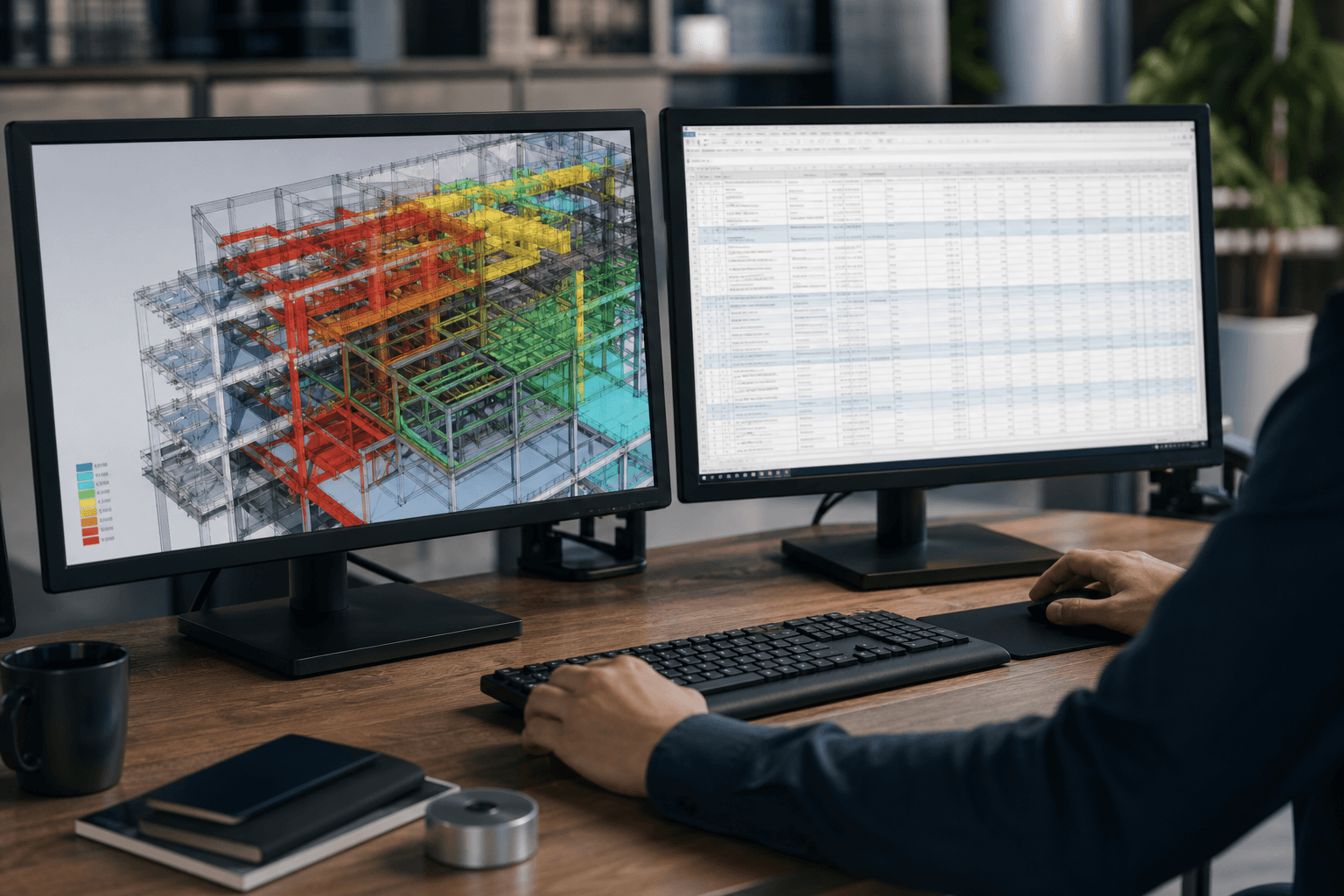
The advent of Building Information Modelling (BIM) has revolutionised the construction industry, offering advanced tools for the design, construction, and operation of buildings. Yet, one area where BIM has begun to show exceptional promise is in post-occupancy evaluation (POE), a process crucial for assessing whether a building meets its initial design goals regarding comfort, efficiency, and sustainability. By harnessing BIM data, stakeholders can now effectively close the building performance gap — the discrepancy between anticipated and actual building performance.
Understanding the Building Performance Gap
The building performance gap, a perennial issue in the construction industry, arises when there's a divergence between the expected and actual performance of a building, primarily concerning energy efficiency and user satisfaction. This gap can arise from several factors including poor design assumptions, construction faults, or operational inefficiencies.
According to the UK Green Building Council, buildings account for approximately 40% of the total carbon footprint, emphasizing the need for accurate performance evaluation and improvement (UKGBC, 2020). Here, BIM serves as an invaluable tool. By using robust data collected throughout the building's lifecycle, BIM facilitates a deeper understanding of how a building performs over time, revealing insights that can inform strategies for improvement.
For instance, Adyantrix employs BIM to gather detailed occupancy data, which is then analysed to identify patterns and irregularities in how spaces are used. This proactive approach aids in highlighting areas where energy is wasted or where occupants' comfort might be compromised, thus bridging the gap between envisaged and realised building performance.
The Role of BIM in Post-Occupancy Evaluation
BIM provides detailed digital representations of physical and functional characteristics of a facility. As a shared knowledge resource, BIM offers a reliable basis for decision making throughout a building's lifecycle, extending into post-occupancy evaluation.
Data Collection and Analysis: The integration of BIM in POE allows for the systematic collection of data such as energy consumption, temperature variations, and usage patterns. For instance, sensors embedded within the building can feed realtime data into the BIM model, offering insights into actual conditions compared to design specifications.
Visualization and Simulation: One significant advantage of using BIM is the capability for advanced 3D visualization and simulation. By visualizing actual performance data overlaid on the BIM model, stakeholders can easily identify problem areas. For example, Adyantrix utilises 3D simulations to demonstrate performance fluctuations across different seasons, providing a comprehensive understanding of a building's behaviour under various conditions.
Feedback and Continuous Improvement: Post-occupancy feedback collected through BIM enables continuous improvement. Detailed data supports the identification of performance trends that may not be apparent through standard methods, thereby informing future design improvements and operational strategies.
Key BIM Tools for Effective POE
The effectiveness of BIM in post-occupancy evaluation is largely influenced by the tools and technologies deployed. Different tools offer varied features and integrations, which impact how successfully BIM data is utilised.
| BIM Tool | Key Features | Ideal For |
|---|---|---|
| Autodesk Revit | Extensive 3D modeling, integrated analysis tools | Detailed design and construction |
| Navisworks | Clash detection, 5D project scheduling | Construction management |
| BIM 360 | Project coordination, cloud-based collaboration | Real-time data sharing and feedback |
| ARCHICAD | Open collaboration, energy evaluation | Architectural design and analysis |
Adyantrix leverages these sophisticated tools to offer tailored BIM solutions that meet specific client needs, ensuring each project's unique characteristics are considered in the POE process.
Sustainable Construction and BIM
A surge of interest in sustainable construction practices has made the integration of BIM with POE even more relevant. With sustainability becoming a non-negotiable component of modern construction, BIM aids in assessing and enhancing sustainability metrics post-occupancy.
For instance, using BIM, Adyantrix can simulate the impact of various sustainable upgrades in real-time before they are implemented physically. This predictive capability allows for evaluating the potential return on investment for energy-efficient systems or sustainable materials, bridging the gap between sustainability aspirations and actual outcomes.
Incorporating BIM into POE ensures a methodical approach towards maintaining and enhancing sustainability. This aligns closely with global sustainability targets and legislative requirements, paving the way for greener and more efficient building practices.
The World Green Building Council has similarly highlighted that operational carbon from buildings, if left unaddressed, will continue to undermine national net-zero commitments unless performance is tracked and corrected throughout a building's life, not just at handover (WorldGBC, 2019). This is precisely where a BIM-based POE programme adds value: rather than treating sustainability as a design-stage checkbox, it becomes an ongoing discipline, measured against the same model that guided construction. Adyantrix structures its sustainability reviews around quarterly data pulls from the BIM model, comparing actual energy and water consumption against the original design targets, and flagging any drift before it compounds into a larger compliance or cost issue. Over multiple review cycles, this creates a longitudinal performance record that is far more persuasive to boards and regulators than a single point-in-time audit.
Integrating POE with Digital Twins for Continuous Performance Monitoring
While a BIM model captures the design intent of a building, a digital twin extends that model into a living, continuously updated representation of the asset as it actually operates. Pairing post-occupancy evaluation with digital twin technology allows the same underlying BIM data to power both a one-off assessment and an always-on monitoring capability, rather than treating them as separate initiatives with separate data pipelines.
In practice, this means sensor feeds, building management system data, and occupant feedback are routed into the digital twin, which in turn updates the BIM-derived baseline in near real time. Facilities teams can then compare current performance against the original design intent at any point in the building's life, not just during a scheduled POE cycle. Adyantrix's approach to this integration is explored in more depth in our article on digital twins in construction and live asset intelligence, which walks through how live data streams are reconciled with the source BIM model to support faster, more confident facilities decisions.
The practical benefit for POE specifically is speed of feedback. Instead of waiting months to compile a formal evaluation report, anomalies such as an HVAC system underperforming against its design load, or a zone consistently running colder than its setpoint, can be surfaced within days. This shortens the loop between identifying a performance gap and commissioning a fix, which is often the single biggest determinant of whether a POE programme delivers measurable savings or simply produces another report that sits unread.
Asset Information Models and the Facilities Management Handover
A post-occupancy evaluation is only as useful as the data it can draw on, and much of that data originates well before occupancy begins, in the Asset Information Model (AIM) handed over from the construction team to facilities management. The AIM consolidates equipment schedules, warranty records, maintenance manuals, and as-built geometry into a structured dataset that should, in principle, make it straightforward to trace a performance issue back to a specific component, contractor, or design decision.
In reality, many organisations receive an AIM that is incomplete, poorly structured, or disconnected from the systems facilities teams actually use day to day, which limits how effectively POE findings can be acted upon. Adyantrix addresses this by validating AIM completeness and structure as a standard part of BIM handover, well before the first POE cycle is due. Our detailed guide on asset information models and smart building operations covers the data standards and validation checks we apply to ensure the AIM is genuinely operable, not just delivered as a contractual formality.
When the AIM is well-formed, POE teams can move directly from an identified anomaly, such as elevated energy draw in a specific plant room, to the relevant asset record, its maintenance history, and its original design specification, without manually cross-referencing spreadsheets and PDFs. This traceability is what turns a POE report from a static document into an actionable maintenance and capital planning tool.
How to Implement a BIM-based POE Approach: A Step-by-Step Guide
Implementing a BIM-based post-occupancy evaluation requires a strategic approach. Below is an annotated step-by-step example to guide stakeholders:
- Initial Setup:
Start by integrating the BIM model with sensors and IoT devices within the building. This setup provides the necessary hardware to collect real-time data.
devices = ['temperature_sensor', 'energy_meter', 'occupancy_sensor'] integration_systems = BIMIntegration(devices) integration_systems.connect() - Data Collection:
Ensure consistent data streams back to the BIM model, capturing consumption metrics and environmental conditions.
data_stream = integration_systems.collect_data() BIMModel.update(data_stream) - Data Monitoring and Analysis: Regularly monitor the insights generated from the data. Use analytics platforms for deeper insights into patterns and anomalies.
- Feedback Gathering: Conduct regular feedback sessions with occupants to triangulate data findings with user experiences.
- Implement Findings: Propose adjustments and upgrades in line with POE findings, using simulations to predict outcomes pre-implementation.
- Continuous Improvement: Employ the feedback loop for ongoing evaluation and adaptive improvements over time.
Adyantrix guides clients through these steps, using its expertise to streamline and enhance the POE process, ensuring that every metric crucial to building performance is optimized.
Frequently Asked Questions
Conclusion
The post-occupancy phase is critical for understanding the real versus anticipated performance of a building. BIM facilitates a detailed, data-driven evaluation that aids in bridging the building performance gap, offering actionable insights for improvements. Adyantrix leverages cutting-edge BIM technology to ensure that stakeholders can enhance building performance and sustainability metrics through informed decision-making. To learn more about how Adyantrix can enhance your building performance through BIM, visit our BIM consulting services page.