Introduction
In the world of construction, the concepts of digital twins and Building Information Modelling (BIM) have been gaining significant traction. The convergence of these technologies promises to transform how projects are conceptualised, executed, and managed. While BIM creates a comprehensive digital model of a building or infrastructure project, digital twins go a step further, adding layers of live data and analytics to transform static blueprints into dynamic, interactive representations.
This is not merely a technological curiosity. According to industry research, the global digital twin market in construction is projected to exceed $15 billion by 2027, driven by growing demand for smarter asset management, reduced operational costs, and more resilient infrastructure. For construction professionals navigating an increasingly complex regulatory and commercial landscape, understanding this shift is no longer optional — it is a strategic imperative.
This blog post explores how digital twins in construction take the BIM model from a working document to a powerful tool for live asset intelligence. We examine practical applications, industry benefits, real-world examples, and the organisational considerations that determine whether adoption succeeds or stalls.
Understanding Digital Twins and BIM
What is BIM?
BIM, or Building Information Modelling, is an intelligent 3D model-based process that provides architecture, engineering, and construction professionals the insight and tools to more efficiently plan, design, construct, and manage buildings and infrastructure. BIM serves as a digital representation of both the physical and functional aspects of a facility, encoding not just geometry but also material properties, system relationships, cost data, and construction sequences.
At its core, BIM is a shared knowledge resource. A well-executed BIM model reduces information loss across project handovers — from design to construction, and from construction to facilities management. It is, in this sense, the foundation upon which more advanced intelligence can be built.
What are Digital Twins?
Digital twins extend the power of BIM by creating a digital replica of physical assets, processes, or systems that evolve in real time as the conditions of the corresponding physical assets change. They enable stakeholders to simulate, analyse, and predict future performance, helping inform decisions across the entire lifecycle of the asset.
Where a BIM model captures a building as it was designed or as-built, a digital twin captures the building as it currently is — and, through predictive modelling, as it is likely to behave in the near future. This distinction is critical. It transforms a passive record into an active intelligence platform, capable of alerting operators to anomalies, modelling retrofit scenarios, and even recommending maintenance schedules based on observed wear patterns.
The relationship between the two technologies is cumulative rather than competitive. BIM provides the structured, semantically rich geometry that gives a digital twin its spatial context. The twin, in turn, breathes life into that geometry through continuous data ingestion and analysis.
From BIM Model to Live Asset Intelligence
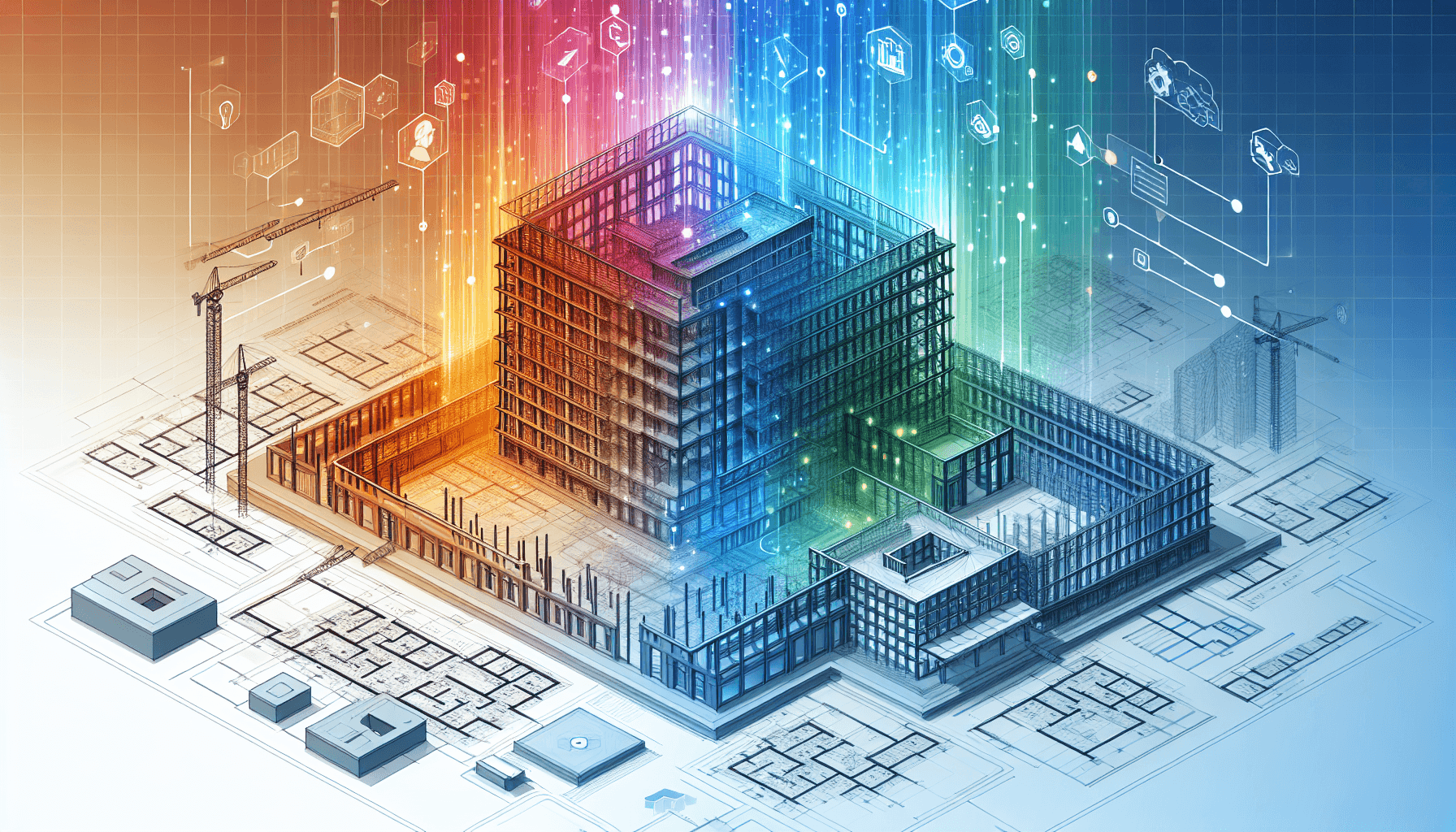
While BIM captures every intricate detail of a facility's design and construction, a digital twin incorporates sensors and IoT devices that feed live data into the model. This transformation enables builders and operators to both monitor current operations and predict future performance.
The transition typically occurs in stages. During the design and construction phase, BIM deliverables — clash-detection reports, 4D construction sequences, cost-loaded models — establish a high-fidelity baseline. At practical completion, this model is validated against as-built conditions, often using laser scanning and photogrammetry to close any gaps between design intent and physical reality. Once the building enters operation, IoT sensors tied to building management systems begin streaming data into the model, progressively enriching it with operational intelligence.
This staged approach reflects how most real-world projects mature. Organisations rarely leap from paper drawings to a fully operational digital twin in a single step. Instead, they build capability incrementally, extracting value at each stage while laying the groundwork for more sophisticated applications.
Real-World Applications
1. Real-Time Monitoring
Consider a high-tech office building equipped with IoT sensors throughout its mechanical, electrical, and plumbing systems. By integrating these sensors with a digital twin, facility managers can track real-time environmental conditions, energy consumption, occupancy levels, air quality readings, and more. This data enables them to adjust lighting, heating, and cooling systems for optimal efficiency and comfort — and to demonstrate compliance with sustainability benchmarks such as BREEAM or LEED.
A practical example is Heathrow Airport's Terminal 2, where digital twin technology has been employed to monitor passenger flow and building performance simultaneously. By correlating foot traffic data with environmental sensor readings, facilities teams can proactively respond to comfort issues before they affect the passenger experience, rather than reacting to complaints after the fact.
2. Predictive Maintenance
In large infrastructure projects such as bridges, tunnels, or subway systems, digital twins are used to anticipate maintenance needs before issues become critical. By analysing data collected through structural health monitoring sensors, engineers can identify patterns of strain, vibration, or settlement that indicate the early onset of fatigue or deterioration. Maintenance can then be scheduled during low-use periods — overnight closures or planned service windows — minimising disruption and avoiding the far greater costs associated with unplanned failures.
The UK's National Highways agency has invested in digital twin pilots for motorway infrastructure, using embedded sensors in bridge decks to feed continuous condition data into asset management platforms. Early results suggest that predictive maintenance informed by live data can reduce whole-life costs by 15 to 25 per cent compared with traditional time-based maintenance regimes.
3. Enhanced Safety
For construction sites, digital twins can improve safety by providing accurate, live feedback on environmental conditions and equipment status. Managers can evaluate risks and implement preemptive measures, reducing the likelihood of accidents. Wearable sensors tracking worker location and physiological indicators can be overlaid on a site's digital twin, enabling safety managers to identify when personnel enter exclusion zones or exhibit signs of heat stress.
Beyond individual projects, this data accumulates into a body of evidence that informs safer practices across an organisation's entire portfolio. Patterns that might be invisible on a single site become statistically significant when aggregated across dozens of projects.
The Role of Data Integration and Interoperability
One of the less-discussed but most consequential factors in digital twin adoption is data interoperability — the ability of disparate systems and data formats to communicate with one another reliably. A construction project typically involves dozens of software platforms: architectural modelling tools, structural analysis packages, MEP design applications, cost management systems, and building management platforms, each with its own proprietary data schema.
For a digital twin to function as a unified intelligence layer, these data streams must be normalised and harmonised. Open standards such as IFC (Industry Foundation Classes) and COBie (Construction Operations Building Information Exchange) play an important role here, providing common vocabularies that allow information to flow between systems without being locked into a single vendor's ecosystem.
Cloud-based common data environments (CDEs) are increasingly the platform of choice for managing this complexity. By centralising all project data in a structured, version-controlled repository, CDEs ensure that every stakeholder — designer, contractor, client, or facilities manager — works from the same authoritative source. When a digital twin is built on top of a well-governed CDE, the quality and completeness of its underlying data is substantially higher, and the risk of errors propagating through to operational decisions is correspondingly lower.
Benefits Beyond Construction
Digital twins offer a range of benefits that extend well beyond the construction phase. Their value compounds over time, as the operational data accumulated during the life of a building creates an ever-richer basis for decision-making.
In the operations and maintenance phase, digital twins support energy optimisation by modelling how changes to building systems would affect consumption before any physical intervention is made. This is particularly valuable in the context of decarbonisation commitments, where building owners face pressure to reduce operational carbon without compromising occupant comfort or service continuity.
For asset retrofits and refurbishments, a digital twin provides an accurate, up-to-date record of existing conditions that dramatically reduces the cost and time required for survey work. Designers can model proposed interventions in the context of live building data, identifying conflicts and optimising sequences before a single worker arrives on site.
At end-of-life, digital twins support circular economy objectives by maintaining detailed records of materials, components, and their provenance. This information can guide selective demolition and materials recovery, ensuring that valuable resources are directed towards reuse rather than landfill.
Post-occupancy analytics represent another high-value application. By correlating space utilisation data with operational costs, asset managers can identify underperforming areas and reconfigure layouts to improve productivity and reduce the cost per occupied workstation — a calculation that has become central to occupier strategy in the post-pandemic era.
Challenges and Considerations
While the benefits are clear, several challenges must be addressed for the successful adoption of digital twins in construction. These include the integration of varied data sources, ensuring data accuracy and consistency, managing the computational infrastructure required to process high-frequency sensor data, and protecting sensitive building and operational information from cyber threats.
Data quality is perhaps the most persistent challenge. A digital twin is only as reliable as the data feeding it. Sensor drift, connectivity failures, and inconsistent calibration can introduce errors that, if undetected, lead to flawed analysis and poor decisions. Robust data governance frameworks — covering sensor maintenance schedules, data validation protocols, and anomaly detection — are therefore not optional extras but fundamental requirements.
Cybersecurity deserves particular attention in this context. A digital twin that controls physical building systems — unlocking doors, adjusting environmental conditions, or managing power distribution — represents a significant attack surface. The principles of security by design, including network segmentation, end-to-end encryption, and regular penetration testing, must be applied rigorously from the outset.
Industry professionals also need to be equipped with the skills to leverage this technology effectively. The gap between those who understand digital twin concepts at a high level and those with the practical competencies to implement and operate them remains wide. Organisations that invest in structured training programmes and recruit talent with data science as well as construction domain expertise will be better positioned to realise the full potential of their digital twin investments.
Selecting the Right Implementation Partner
Given the technical complexity and the strategic stakes involved, the choice of implementation partner is one of the most consequential decisions an organisation will make on its digital twin journey. The ideal partner brings together deep expertise in BIM and information management, practical experience with IoT integration and sensor networks, strong data engineering capabilities, and a track record of delivering measurable outcomes in comparable built environment contexts.
It is equally important that a partner can engage effectively with the client's existing technology landscape — working within established CDEs, integrating with incumbent building management systems, and respecting the contractual and data-sharing frameworks already in place. Digital twin implementations that require clients to replace their entire technology stack rarely succeed; those that build on existing foundations and extend them incrementally are far more likely to deliver lasting value.
Governance is another area where experienced partners add disproportionate value. Defining data ownership, establishing change management protocols, and aligning stakeholders across design, construction, and operations teams requires skills that are as much organisational as technical.
Conclusion
Digital twins, powered by advanced BIM processes, stand at the forefront of the construction industry's digital transformation. By turning theoretical models into living entities that evolve throughout an asset's lifecycle, they unlock new potential in efficiency, sustainability, and innovation. The technology is no longer confined to showcase projects or research pilots; it is becoming a standard expectation on major infrastructure programmes and complex commercial developments worldwide.
As regulatory and commercial pressures mount — from mandatory BIM requirements on public-sector projects to net-zero carbon commitments demanding granular operational data — the case for digital twin adoption will only strengthen. Organisations that build their capability now, rather than waiting for the technology to become even more mature, will enjoy a meaningful competitive advantage.
At Adyantrix, we work with clients across the construction, infrastructure, and real estate sectors to develop and implement BIM and digital twin strategies that are grounded in practical outcomes. From initial BIM consulting and model development through to scan-to-BIM workflows, IoT integration, and ongoing asset intelligence programmes, our team brings the technical depth and sector experience needed to turn the promise of digital twins into tangible, measurable value. If your organisation is ready to move beyond static models and into live asset intelligence, we would welcome the conversation.
Speak with our BIM Consulting team at Adyantrix to find out how we can support your next project.