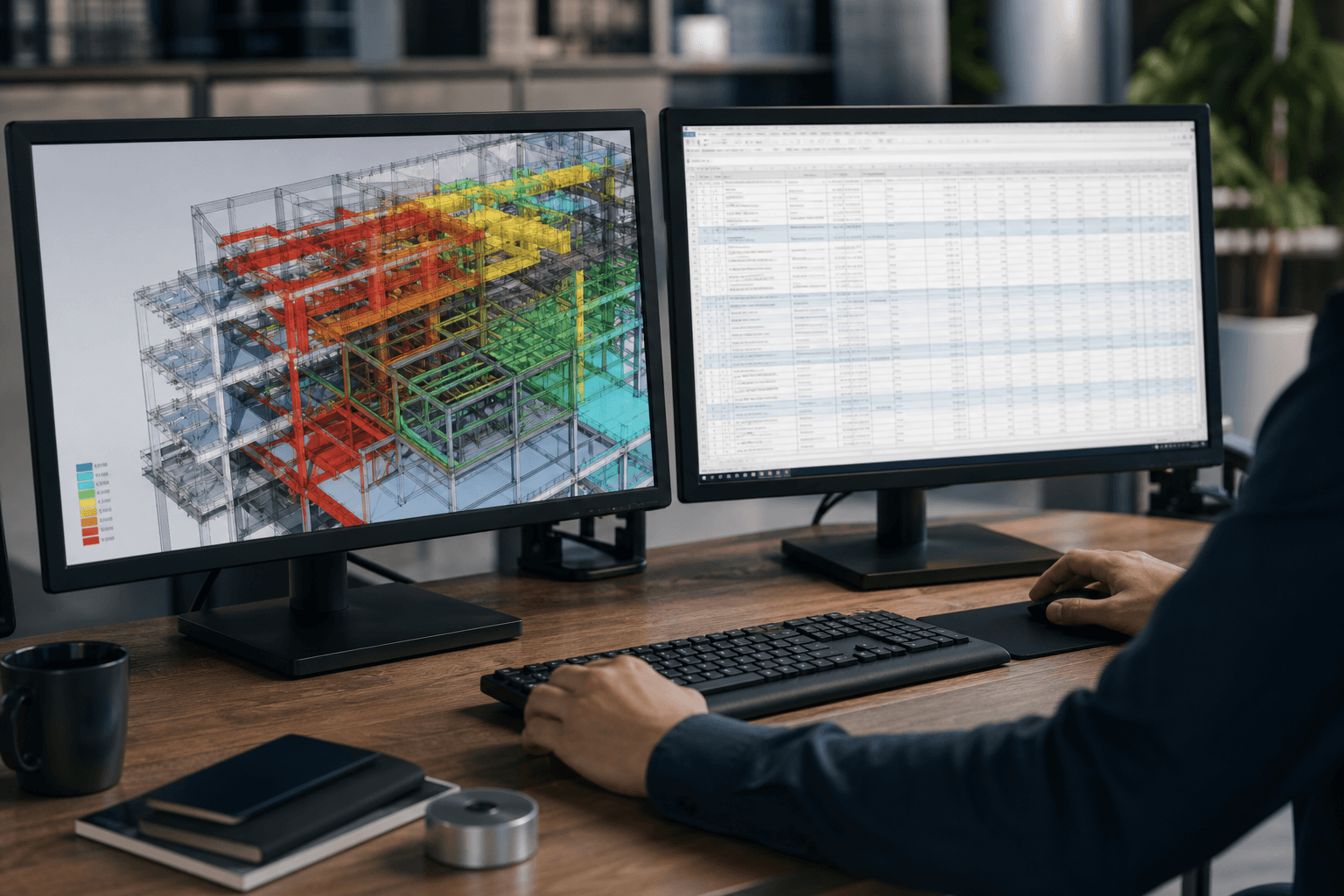
When embarking on the ambitious task of designing a large hospital, employing the right Building Information Modelling (BIM) tools can significantly streamline the process. Revit, a renowned BIM software, stands out as a powerful tool for complex health infrastructure projects. At Adyantrix, we leverage our expertise to ensure that healthcare facilities are not only efficient and functional but also rich in detail and design integrity.
Understanding the Complexity of Hospital Projects
Hospitals are one of the most complex building types due to their multifaceted operational requirements and the need to accommodate numerous medical and support functions. According to a study published by the Architects’ Journal, around 40% of hospital design issues stem from coordination complexities and lack of clarity in initial design phases. This calls for robust BIM solutions capable of handling both micro-level details and macro-level coordination.
Adyantrix employs a strategic approach that begins with a comprehensive needs assessment. This allows the early identification of specific hospital functions such as diagnostics, treatment, rehabilitation, administration, and logistics. By accurately mapping these functions in the Revit environment, we address potential overlaps and usability concerns. A clear understanding of space utilizations and traffic flow patterns is crucial to creating a seamless hospital environment built on the foundation of Revit.
Collaborative Workflows for Efficient Hospital Design
Collaboration is key in any large-scale project, and Revit's cloud-based modelling environment provides a platform for seamless collaboration among architects, engineers, and contractors. The use of Revit's worksharing capabilities allows multiple stakeholders to engage in a project concurrently without data loss or overwrites, thus enhancing the decision-making process through real-time contributions.
At Adyantrix, we harness these collaborative features by integrating tools such as Autodesk BIM 360 for cloud connectivity and data management. This ensures synchronized updates across all project stakeholders, effectively minimizing the chances of miscommunication. In one of our recent projects involving a tertiary care hospital, we saw a remarkable 25% reduction in project time merely by improving these coordination channels—a testament to the efficiency of a streamlined collaborative process.
Handling Complex Healthcare Layouts with Revit
The architectural and functional layout of a hospital must cater to physical restrictions, service efficiency, and patient safety regulations. With its parametric modelling capabilities, Revit simplifies this complexity by allowing designers to create adaptable designs that conform to various technical specifications and regulatory requirements.
In practice, a typical large hospital model comprises thousands of Revit families, making it crucial to establish a standardised naming and categorisation convention from the onset. This consistency simplifies the tracking and revision of elements within the model. Adyantrix emphasizes the establishment of a robust library from which hospital components can be quickly adapted or customized, ensuring both design flexibility and compliance with medical construction standards.
Here's a simplified step-by-step approach to creating a standard Revit family for use in hospital projects:
Step 1: Open Revit and start a new family file using the appropriate template for hospital equipment.
Step 2: Use placeholders and reference planes to dimension equipment dimensions and alignment.
Step 3: Define parameter values to enable easy adjustments and scalability.
Step 4: Apply materials and import necessary MEP components for a comprehensive setup.
Step 5: Save the family into a centralized library for easy access and use across the project.
This methodology ensures that all elements remain consistent and functional throughout the lifecycle of the hospital project.
Comparing BIM Approaches: Standard vs. Custom Solutions
When designing hospitals, the choice between industry-standard Revit solutions and developing custom plugins or scripts can significantly impact project delivery. Below is a comparison table outlining these differing approaches:
| Aspect | Standard Revit Tools | Custom Solutions (Dynamo/Plugins) |
|---|---|---|
| Flexibility | Limited to pre-set functions | High, with bespoke scripts |
| Speed of Deployment | Immediate, with little setup | Requires development time |
| Cost Efficiency | Cost-effective for small tweaks | Initial investment can be higher |
| Scalability | Suitable for moderate changes | Highly scalable for large projects |
| Maintenance | Lower, with regular updates | Requires updating custom scripts |
Adyantrix often recommends a hybrid approach, starting with standard tools and introducing custom solutions when unique challenges arise, ensuring each project remains both innovative and practical.
Data Management and Model Integrity
In the context of large hospitals, dealing with extensive datasets is inevitable. From patient flow to medical equipment placement, every aspect involves considerable data processing. Revit enables meticulous management of this data through its powerful scheduling and data export capabilities.
Adyantrix places significant emphasis on ensuring data integrity throughout the modelling process. By using Revit's built-in validation tools alongside our custom audit protocols, we repeatedly check for data anomalies that could affect project outcomes. For example, during a project audit for a regional medical centre, our integrated validation tools flagged critical discrepancies in floor area schedules, enabling timely corrections that preserved both design intent and operational efficiency.
Frequently Asked Questions
Conclusion
Successful hospital projects rely heavily on the precision and collaborative nature of BIM software like Revit. By following best practices and strategically utilising both standard and custom tools, Adyantrix consistently delivers designs that are both innovative and functional. For more insights into how Adyantrix can assist with your healthcare design projects, consider exploring our BIM Consulting Services.