The Challenge
A multinational technology corporation faced the complex challenge of developing a six-building office campus that was not only modern in design but also equipped with IoT-ready infrastructure to support a connected work environment. The goal was to enhance operational efficiency, improve communication between buildings, and create an agile workspace that could adapt to future technological advancements. Moreover, they needed a solution that would enable the integration of advanced building management systems and smart technologies, ensuring sustainable energy use and optimised resource management across the expansive site.
How Adyantrix Approached It
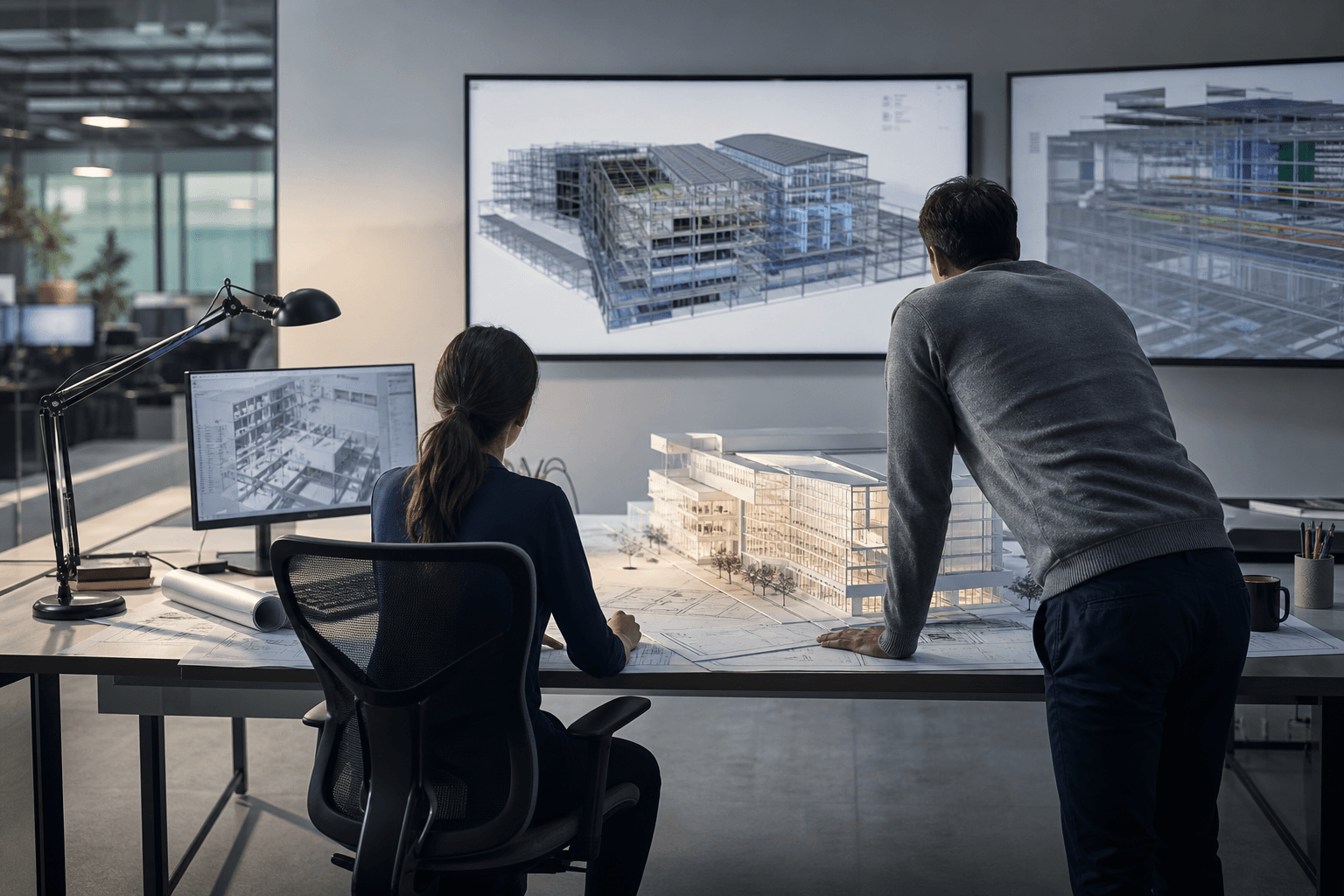
Understanding the client's need for a state-of-the-art IoT-ready office campus, Adyantrix initiated the project with a comprehensive analysis of the site. The team conducted detailed feasibility studies to determine the optimal technological frameworks and developed a strategic BIM (Building Information Modeling) plan to align with the client's visions. Leveraging their expertise in architectural and structural BIM services, Adyantrix created a highly detailed 3D model of the campus. This model served as a digital twin, facilitating seamless integration of smart technology systems.
The Adyantrix team collaborated closely with the client's stakeholders, ensuring all requirements and specifications were captured and adhered to in the planning phase. Regular workshops and meetings were held to ensure transparency and alignment with the project's objectives. A phased implementation strategy was adopted to manage the complexity of integrating IoT infrastructure across the six buildings.
Recognising that six interconnected buildings would each generate their own stream of sensor and systems data, Adyantrix structured the digital twin as a federated model, with each building maintained as its own coordinated dataset that could still be queried and visualised as a single campus-wide view. This approach mirrors the same federation principles we apply on other multi-building portfolios, allowing the client's facilities team to drill down into a single building's performance or roll up to a campus-level dashboard without maintaining two separate systems — see our related work on digital twins for live asset intelligence for more on how this pattern extends beyond a single site.
Technical Implementation
Adyantrix used a combination of advanced BIM tools and IoT technologies to execute this ambitious project. Revit was employed extensively for designing and detailing, while Dynamo scripts facilitated automation of repetitive tasks. The team implemented comprehensive clash detection and coordination using Navisworks, ensuring all components interacted seamlessly without interference.
To integrate IoT capabilities, the Adyantrix team utilized open standards and protocols such as MQTT, allowing devices to communicate over a network with minimal latency. Additionally, sensors were strategically integrated within the buildings for real-time monitoring of environmental conditions and energy consumption. BACnet and KNX systems were installed for managing the building's internal systems, such as lighting, HVAC, and security — the same protocol integration work covered by our IoT integration consulting service.
A major part of the implementation involved setting up a robust data management framework, delivered through the same architecture we offer as a standalone IoT data platform. Adyantrix employed cloud-based solutions to manage the vast amount of data generated by the IoT devices. This included deploying analytical dashboards that provided insights into building operations, enabling the client to make informed decisions and optimizations.
The project timeline spanned 18 months from initial planning to final implementation. The phased approach allowed for iterative testing and refinement of systems, ensuring each building was precisely tuned to the required specifications before full implementation across the campus. This staged rollout is consistent with the energy-management architecture we've documented elsewhere — see our work on IoT platforms for smart building energy management — where phased sensor deployment reduces the risk of a single misconfigured building skewing campus-wide analytics.
Results Delivered
Adyantrix successfully delivered an IoT-ready office campus that significantly enhanced operational productivity and energy efficiency. The interconnected network of smart devices enabled real-time data exchange, resulting in a 25% reduction in energy consumption, as confirmed by post-implementation audits conducted by the client’s operations team.
The digital twin provided by the BIM model allowed the client to visualize performance metrics and made facility management more intuitive and efficient. Communication between buildings was streamlined, reducing logistical overhead and enhancing collaboration across various departments.
The project achieved all planned objectives within the stipulated time and budget, surpassing the client's expectations in both the quality and efficiency of the integrated solutions.
Lessons Learned
The integration of IoT-ready infrastructure in multi-building campuses requires meticulous planning and coordination. Adyantrix learned the importance of phased deployments and continuous stakeholder engagement in successfully managing the complexity of such expansive projects. The adaptation of open standards in IoT systems was pivotal in ensuring performance reliability and ease of future upgrades.
Next Steps
Building on the success of this project, Adyantrix plans to further refine their smart building solutions, incorporating emerging technologies such as AI-driven energy management systems and enhanced digital twin functionalities to provide clients with even more robust capabilities for managing and optimizing real estate assets.
Frequently Asked Questions
1. What is BIM's role in IoT integration for smart office buildings?
BIM plays a crucial role by creating a detailed digital representation of the building, which allows for the integration of IoT systems into the architectural and structural elements, facilitating real-time data management and optimization.
2. How does IoT-ready infrastructure benefit office campuses?
It enhances operational efficiency by enabling automation and streamlined management of building systems, reduces energy consumption through smart data-driven decisions, and improves occupant comfort and productivity.
3. How did Adyantrix ensure successful communication between devices and systems?
Adyantrix employed open communication protocols and standards such as MQTT and BACnet, ensuring interoperability and reliable data exchange across various devices and building systems.
4. What challenges were encountered during the implementation?
Significant challenges included integrating multiple systems within the buildings and maintaining synchronization across them, which was managed through strategic planning and robust testing phases.
5. What are the future possibilities for IoT and BIM in real estate?
The combination of IoT and BIM holds immense potential for advancing real estate by enabling intelligent environments that self-adapt, enhancing sustainability, and offering vast data for predictive maintenance and management.
Work with Adyantrix
If you're looking to revolutionize your real estate infrastructure with cutting-edge BIM and IoT solutions, Adyantrix has the expertise and resources to make it happen. Explore our architectural BIM services and smart building automation capabilities, and discover how we can assist in transforming your office spaces. Ready to start your project? Contact us today to learn more.