The Challenge
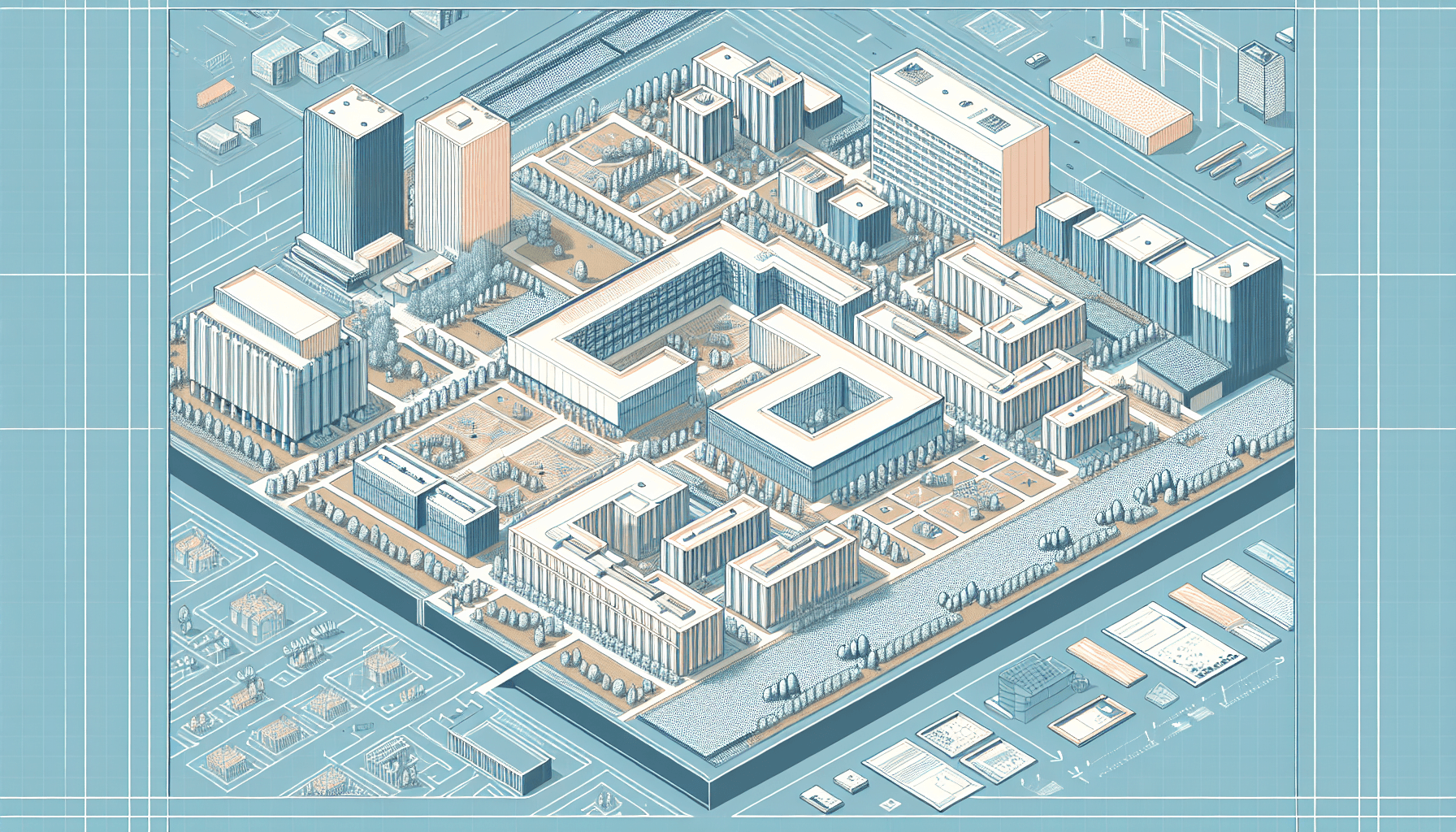
A prestigious UK university embarked on a significant mission to overhaul its entire campus, proposing a master-plan that included the design and construction of 14 new buildings. This ambitious project involved multiple stakeholders, extensive coordination efforts, and a time-sensitive schedule to ensure minimum disruption to students and faculty. The main challenge was integrating diverse architectural styles and complex building functionalities, all while maintaining cost-effectiveness and sustainability benchmarks.
The Solution
We at Adyantrix adopted an integrated BIM approach using Autodesk Construction Cloud (ACC) to streamline the development process. Our team facilitated cross-departmental collaboration, using BIM as the central tool for communication and decision-making. We developed detailed 3D models for each building, incorporating structural, MEP, and architectural elements into a comprehensive digital representation.
Through Autodesk ACC, we were able to leverage cloud-based storage and real-time data sharing capabilities, ensuring that every stakeholder had access to the latest project updates. Clash detection and coordination services were employed to identify potential conflicts early in the design phase, thus minimizing costly on-site alterations. Our experts ran simulations to refine construction phases, ensuring efficiency and accuracy in the execution.
Key Results
The project successfully brought all 14 buildings to completion on schedule, with a 20% reduction in projected costs due to minimised rework and increased material efficiency. By utilising BIM, energy usage predictions were optimised, leading to an anticipated 15% decrease in energy consumption across the new campus buildings.
Stakeholders, including architects, engineers, and facility managers, reported enhanced communication and engagement through shared models and transparent process management. This unified approach increased overall project quality and significantly improved the ease of transition to the finished facilities.
In conclusion, Adyantrix's deployment of BIM via Autodesk ACC not only solved the complex logistics of coordinating multiple buildings simultaneously but also set a benchmark for future educational infrastructure projects in terms of sustainability, efficiency, and stakeholder satisfaction.
Technical Approach
Managing fourteen buildings concurrently within a single BIM environment demanded a governance and technical architecture that could scale without fragmenting into fourteen independent data silos.
We structured the common data environment (CDE) on Autodesk Construction Cloud using a project hierarchy that separated the campus master-plan level from individual building projects whilst maintaining federated visibility across all. At the top level, a campus-wide site model — authored in Civil 3D — provided the shared coordinate system, topographic survey data, and existing services routes that all building models referenced. This ensured that every new building's foundations, drainage connections, and external service entries were positioned with sub-centimetre accuracy relative to live campus infrastructure.
Each of the fourteen building projects was then set up as a separate ACC project with its own federated model structure (architectural, structural, MEP linked files), whilst being connected to the campus master model via external reference. Clash detection was run at two levels: within each building (inter-discipline) and across building boundaries (inter-building), the latter being critical for identifying conflicts between neighbouring buildings' drainage runs, electrical substation clearances, and below-ground service corridors.
Modelling standards were governed by a programme-level BIM Protocol authored in accordance with BS EN ISO 19650 Parts 1 and 2, establishing naming conventions, model breakdown structures, LOD milestones, and information delivery responsibilities across all fourteen design teams. Seven separate architect and engineering practices were involved; the protocol was the single document that ensured model data was interoperable regardless of which practice had authored it.
For sustainability analysis, Revit models were exported at design development stage to Autodesk Insight for solar radiation and energy modelling, generating building performance predictions that informed the MEP system selection for each building type — student residential, lecture facilities, research laboratories, and administrative offices each had distinct energy profiles that required tailored mechanical and electrical strategies.
Implementation Highlights
Coordinating fourteen buildings simultaneously introduced programme management challenges that went well beyond those of a single complex building.
Phased design programme management was essential because the fourteen buildings did not all start design at the same time. The programme was sequenced so that buildings serving the most time-sensitive academic needs (a new engineering faculty and a student wellbeing centre) entered design first, whilst ancillary buildings followed in subsequent tranches. We developed a programme-level BIM readiness tracker that indicated, for each building, what stage its models were at and what information deliveries were due in the coming four weeks. This tracker was updated weekly and reviewed in the programme-level coordination meeting attended by all design teams.
Inter-building coordination surfaced conflicts that neither individual building team would have identified independently. The most significant was a clash between the proposed main drainage route from the new engineering building and the foundations of an existing Grade II listed building immediately adjacent. This conflict was identified in the campus site model during an early-stage infrastructure coordination check, six months before either building's design was finalised — sufficiently early to reroute the drainage without affecting either building's design programme.
Managing 47 Autodesk ACC user organisations — covering seven architect/engineer practices, the university's facilities management team, the programme manager, the cost consultant, and specialist subconsultants — required careful ACC administration. We managed the CDE on the client's behalf, administering user permissions, folder structures, and transmittal workflows. Standardising the transmittal process (all formal information releases through ACC's formal review workflow, not ad-hoc file sharing) was the single most impactful governance measure in preventing information version confusion.
Sustainability coordination between MEP engineers and the university's sustainability team required a dedicated coordination thread. The university had committed to a 2040 Net Zero Carbon target, and each building's predicted energy performance needed to be tracked against the programme's cumulative carbon budget. We produced quarterly BIM-derived energy summary reports for the university's sustainability office, aggregating Autodesk Insight outputs across all buildings in design at that point.
Measurable Outcomes
- Cost reduction: The 20% reduction in projected costs was attributed to three sources: reduced rework from early clash detection (estimated 9% of saving), improved material scheduling accuracy from model-derived quantities (6%), and the elimination of duplicate survey and drawing production costs across buildings that shared common design standards (5%).
- Programme performance: All 14 buildings reached construction-issue stage within their scheduled design completion dates. On a programme of this scale, with seven design practices involved, achieving zero design programme overruns was a direct consequence of the structured CDE governance and the programme-level BIM coordination cadence.
- Clashes resolved: Over the full programme, 2,840 inter-discipline and inter-building clashes were identified and resolved during design. The inter-building clash set — 312 conflicts that would have been entirely invisible without the campus-level federated model — represented a particular value-add of the programme-level BIM approach.
- Energy performance: Autodesk Insight modelling predicted a 15% reduction in regulated energy consumption compared to a code-minimum design baseline, driven by optimised building orientations, high-performance façade specifications, and heat recovery ventilation strategies recommended by the BIM-integrated energy analysis workflow.
- Facilities handover: The university's facilities management team received IFC 4.0 as-built models for all 14 buildings at practical completion, integrated with their existing CAFM system. The FM team reported that the quality of as-built information was significantly superior to previous campus projects, enabling them to populate their PPM (planned preventative maintenance) schedules directly from model data without additional survey work.
Lessons Learned
A programme-level BIM Protocol is not optional on multi-building, multi-practice programmes. In the early weeks of the project, two design practices attempted to use different drawing naming conventions and model breakdown structures to those specified in the Protocol, citing their own office standards. Allowing these deviations, even temporarily, would have made automated clash detection unreliable and information management unworkable. Enforcing the Protocol firmly — including returning non-compliant model submissions for correction — established the discipline needed for the CDE to function effectively across a programme of this scale.
Inter-building coordination requires dedicated resource, not just a byproduct of building-level coordination. The fourteen building teams were each focused on coordinating their own building. Without a dedicated programme-level coordination role (which we provided), inter-building conflicts would have remained invisible until site stage. Structuring and resourcing programme-level coordination as a distinct deliverable — with its own meeting cadence, clash detection protocol, and issue tracking — was essential.
Sustainability targets must be encoded in the BIM workflow from the outset. The university's Net Zero commitment was stated at the project brief stage but was not initially connected to the BIM programme. Retrospectively integrating energy modelling into an established BIM workflow was more disruptive than it would have been had it been built in from the beginning. On future education-sector programmes with explicit sustainability targets, we now establish the energy modelling workflow in the BIM Execution Plan alongside the structural and MEP coordination workflows.
Why This Approach Worked
The success of this programme came down to treating the fourteen buildings not as fourteen separate projects sharing a site, but as a single integrated campus delivery programme that happened to involve fourteen discrete structures. This framing drove every major governance decision — the unified CDE, the programme-level BIM Protocol, the campus site model, and the inter-building coordination cadence.
Autodesk Construction Cloud was the enabling technology, but its value was only realised because the information management framework built around it was disciplined and consistently enforced. Cloud-based BIM tools create the potential for real-time collaboration across multiple organisations; the BIM governance framework converts that potential into practice by specifying exactly who publishes what, when, in what format, and reviewed against what standard. Without that governance, the same tools would have produced fourteen sets of well-coordinated individual buildings with undetected conflicts between them — a common failure mode on large campus programmes that this project successfully avoided.
Speak with our BIM Consulting team at Adyantrix to find out how we can support your next project.
Work with Adyantrix
If you are looking to tackle a similar challenge, Adyantrix has the expertise to help across the full project lifecycle. Our BIM consulting practice covers BEP authoring, ISO 19650 strategy, and CDE implementation. Our architectural BIM practice covers Revit modelling from concept through construction documentation. Our clash detection & coordination practice covers multidisciplinary coordination and conflict resolution. Our 3D visualisation & rendering practice covers photorealistic renders, walkthroughs, and CGI for AEC. Get in touch to discuss your requirements — no commitment required.