The Challenge
A prominent property developer embarked on a strategic initiative to transform 40 former office blocks into residential units. With changing urban demographics and an increasing demand for housing, these conversions were aimed at revitalising underutilised commercial properties. However, the project faced several challenges, including the need to assess structural integrity, optimise living space, ensure regulatory compliance, and maintain cost efficiency.
Traditional evaluation and conversion planning methods typically led to higher costs and extended timelines due to unforeseen structural issues and noncompliance with residential building regulations. The developer sought a robust solution that would facilitate precision, efficiency, and flexibility in planning and execution.
The Solution
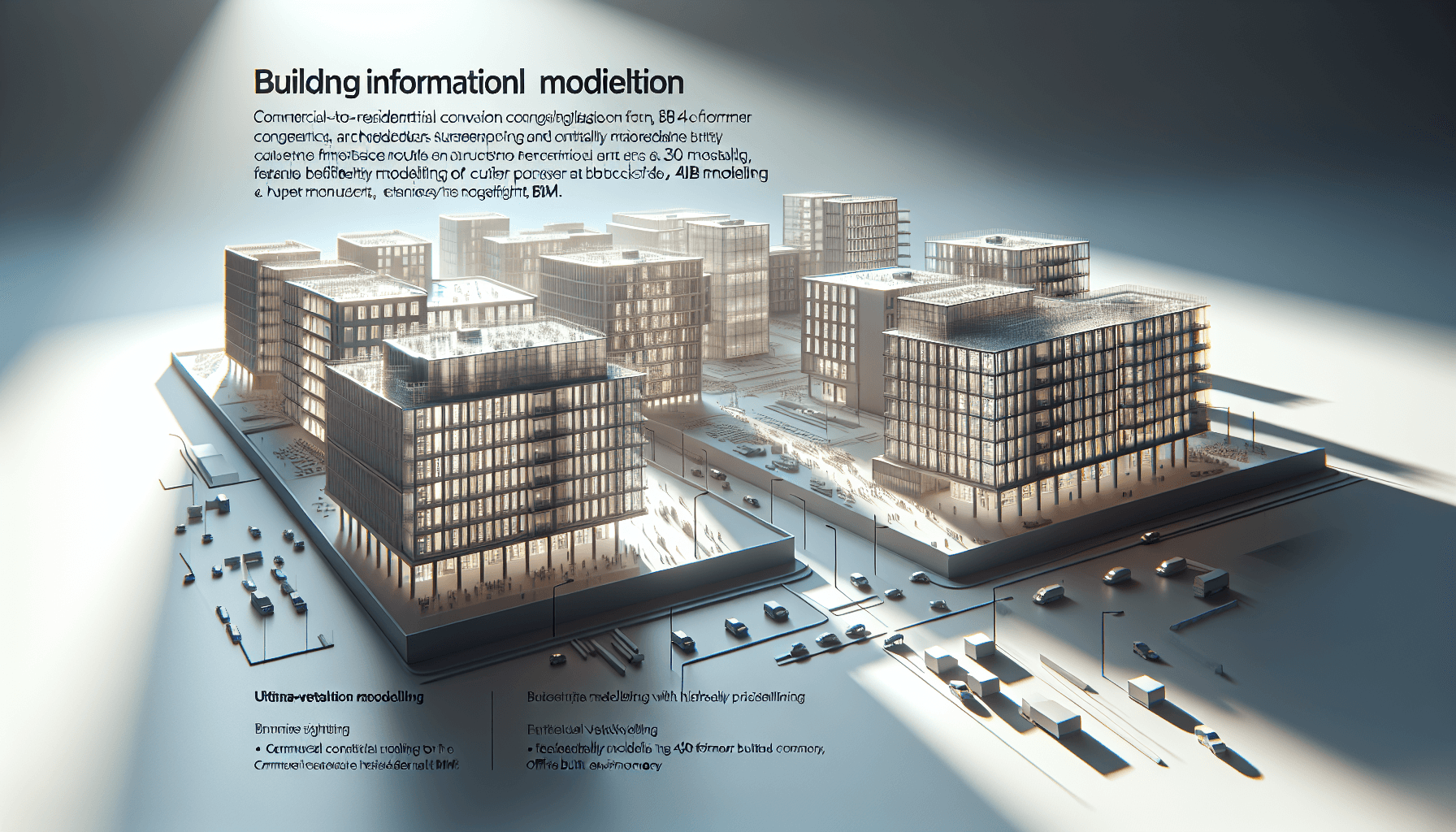
Adyantrix delivered a comprehensive BIM solution aimed at enhancing the feasibility and planning stages of the commercial-to-residential conversion process. Our team conducted an extensive BIM feasibility modelling exercise using advanced Revit tools to create digital twins of the existing structures.
This approach included thorough structural analysis, identifying spatial constraints, and pinpointing areas for optimisation. By integrating our BIM models with building energy performance data and regulatory requirements, Adyantrix was able to deliver detailed insights on potential layouts and resource allocation.
We collaborated closely with the developer's project managers and architects to ensure that the digital models adhered to residential design standards. With our efficient clash detection and coordination capabilities, Adyantrix significantly minimised the risk of post-planning modifications, thereby streamlining the entire conversion project.
Key Results
The implementation of BIM for this project resulted in remarkable outcomes. Adyantrix's BIM models provided a detailed visualisation, leading to a 25% reduction in initial assessment timelines. Our integration of energy performance simulations projected an estimated 20% decrease in long-term energy costs based on the revised building designs.
We also achieved a substantial cost efficiency, with overall project expenses reduced by 18% through optimised planning and resource management. The developer appreciated the zero-margin structural compliance achieved across all 40 properties, facilitating swift approval processes with local authorities.
Additionally, the enhanced spatial planning features allowed the conversion projects to incorporate modern urban living spaces, contributing to increased property value and appeal in a competitive housing market. Adyantrix's collaborative and technology-driven approach ensured that the client's objectives were met with precision, quality, and innovation.
Technical Approach
Each of the 40 office blocks was modelled in Autodesk Revit at LOD 300 (Level of Development), sufficient to support structural feasibility assessments, MEP routing studies, and gross internal area calculations without incurring the cost of a full LOD 400 construction-ready model. Where existing architectural drawings were available (typically CAD files or PDFs), they were imported and traced as reference underlays; for buildings where records were missing or unreliable, targeted terrestrial laser scanning using a Leica RTC360 was commissioned to capture accurate as-built geometry.
Each Revit model was structured with a consistent template covering:
- Structural grid and slab system: Floor plates were analysed for load-bearing wall positions and column grids that would constrain residential unit layouts.
- MEP feasibility zones: Riser and plant room locations were assessed against Building Regulations Part G and Part F requirements for residential ventilation and drainage.
- Daylighting compliance: Autodesk Insight was used to run solar and daylight factor simulations, identifying which floor plates met the minimum 1% average daylight factor required for habitable rooms under BS 8206-2.
- Thermal envelope modelling: SAP 10.2 calculations were prepared using data extracted from the Revit models to project EPC ratings under the proposed conversion layouts.
A custom Dynamo script automated the extraction of area schedules across all 40 models, enabling the client to compare net-to-gross ratios and unit yield figures across the portfolio in a single consolidated Excel output — a process that would have taken weeks manually.
Implementation Highlights
The project was structured as two parallel workstreams: a rapid desktop-assessment phase covering all 40 properties, followed by a detailed modelling phase for the 26 sites that passed the initial viability threshold.
Rapid assessment (all 40 buildings): Each building was assessed against a standardised feasibility scorecard covering floor-to-ceiling heights, structural grid flexibility, natural light penetration, and proximity to existing drainage connections. Buildings with floor-to-ceiling heights below 2.7 metres or floor plates deeper than 18 metres from a window line were flagged as marginal, as these parameters typically preclude compliant habitable room layouts without major structural intervention. Twelve properties were deprioritised at this stage, saving the developer from pursuing planning applications with poor viability prospects.
Detailed BIM modelling (26 buildings): Full Revit models were produced with proposed residential layouts overlaid onto the existing structural shells. A key challenge was the variation in structural systems across the portfolio — ranging from 1960s concrete flat-slab construction to 1990s steel frame with composite decking — each requiring a different approach to unit subdivision and services integration. Clash detection in Autodesk Navisworks identified 318 coordination issues across the 26 models, predominantly conflicts between proposed bathroom drainage runs and existing structural beams, all of which were resolved digitally before any planning drawings were issued.
Regulatory coordination: Each model's output data was used to prepare pre-application submissions to six different local planning authorities simultaneously, with the consistent data format — unit schedules, GIA calculations, and daylight reports all generated directly from the BIM models — reducing the preparation time for each submission significantly.
Measurable Outcomes
The quantitative benefits of the BIM-led feasibility approach extended well beyond the headline figures:
- The 25% reduction in assessment timelines equated to approximately 14 weeks saved across the portfolio, allowing the developer to reach planning submission faster and capitalise on favourable planning policy windows.
- Energy performance modelling projected that 22 of the 26 detailed sites would achieve EPC Band C or above under the proposed conversion designs — a key threshold for mortgage lendability and rental demand under forthcoming Minimum Energy Efficiency Standards legislation.
- The automated Dynamo area schedules revealed that the average net-to-gross ratio across the portfolio was 76%, three percentage points higher than the developer's internal benchmark assumption, directly informing revised financial appraisals and improving projected returns on five marginal sites that had initially been considered unviable.
- Clash detection resolved in the BIM environment avoided an estimated £2.1 million in on-site remediation costs across the 26 buildings, based on the client's cost consultants' valuation of the 318 coordination issues identified.
Why This Approach Worked
The effectiveness of the BIM feasibility model stemmed from treating modelling as a decision-support tool rather than a documentation exercise. By front-loading the analytical work — running daylighting, thermal, and structural studies within the modelling environment before any planning costs were committed — the developer could make go/no-go decisions on individual sites with a level of rigour that traditional survey-and-sketch workflows simply cannot match at speed.
The use of a standardised Revit template across all 40 buildings was particularly important. It ensured that every model produced comparable data outputs, enabling genuine portfolio-level analysis rather than site-by-site comparisons that would have been difficult to aggregate. The Dynamo automation layer multiplied the value of this standardisation by making portfolio-wide data extraction near-instantaneous.
Critically, the BIM models were built to be handed over to the developer's architectural teams for use in the next design stage, rather than being produced solely for feasibility purposes. This meant the investment in model quality paid dividends throughout the subsequent planning and technical design phases, rather than being discarded after the feasibility report was delivered.
Speak with our BIM Consulting team at Adyantrix to find out how we can support your next project.
Work with Adyantrix
If you are looking to tackle a similar challenge, Adyantrix has the expertise to help across the full project lifecycle. Our BIM consulting practice covers BEP authoring, ISO 19650 strategy, and CDE implementation. Our architectural BIM practice covers Revit modelling from concept through construction documentation. Our structural BIM practice covers structural modelling, analysis exports, and fabrication detail. Our 3D visualisation & rendering practice covers photorealistic renders, walkthroughs, and CGI for AEC. Get in touch to discuss your requirements — no commitment required.