The Challenge
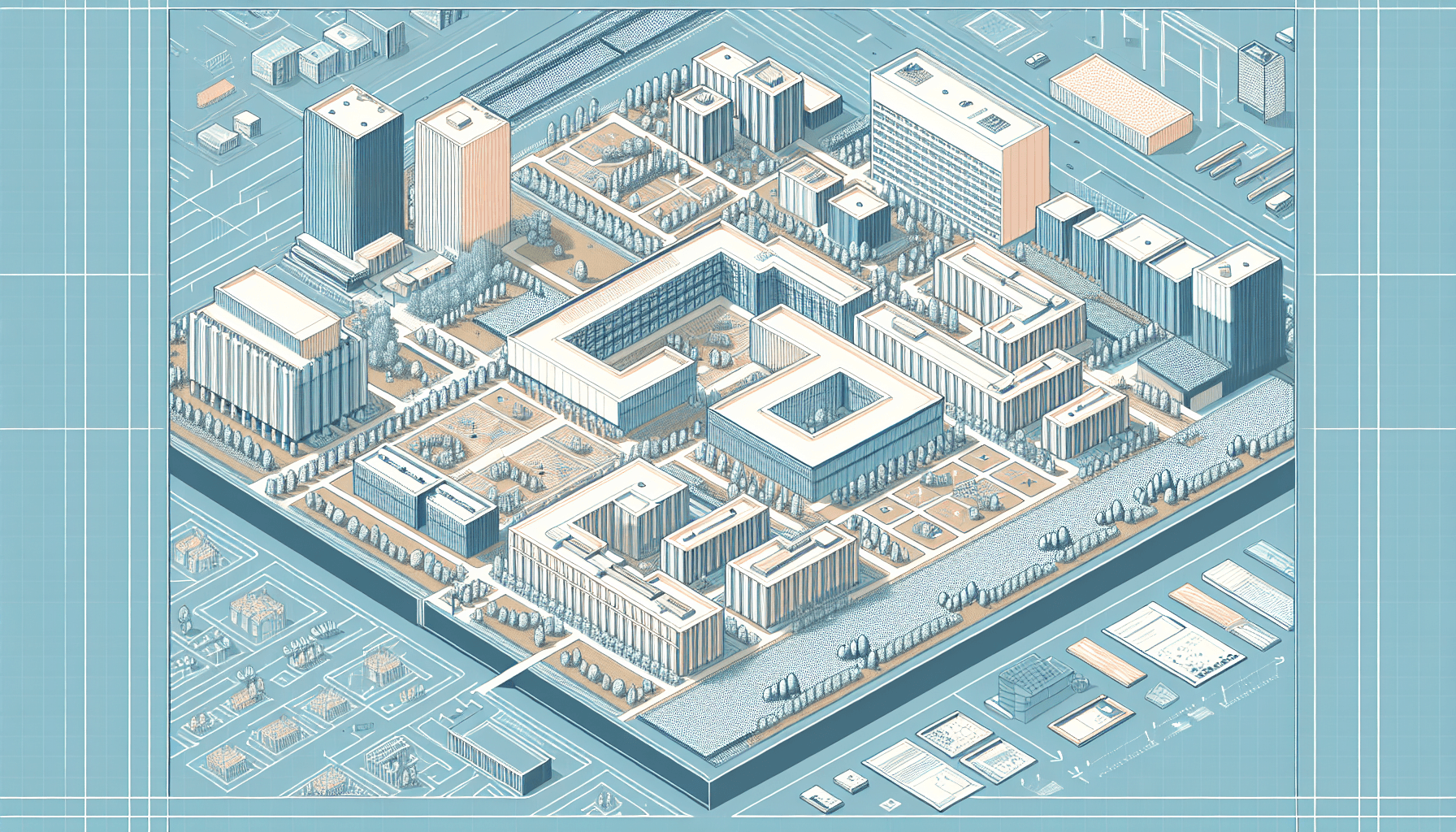
A national 3PL provider was embarking on constructing a new 500,000 square foot distribution centre intended to streamline its logistics operations. As part of the project, precise coordination was crucial for integrating mechanical, electrical, and plumbing (MEP) systems with complex racking systems. The challenge lay in ensuring these elements aligned perfectly within the expansive warehouse space to optimise operational efficiency and minimise potential conflicts during construction. It required advanced planning and robust coordination to prevent costly delays and rework.
The Solution
Adyantrix stepped in to deliver a comprehensive BIM solution that streamlined the coordination of MEP and racking systems within the distribution centre. Our approach commenced with developing a precise 3D BIM model of the entire facility, incorporating all architectural, structural, and MEP elements alongside the racking components. Using Revit and sophisticated clash detection software, our team meticulously analysed the model to identify and resolve potential conflicts. Through iterative reviews and adjustments, we ensured all systems fit harmoniously within the designated space.
A significant aspect of our solution was leveraging automated BIM workflows to expedite the design process. By integrating Revit family creation and custom Dynamo scripts, we optimised the model for both design accuracy and constructability, thereby reducing manual overhead and enhancing precision. This approach provided a comprehensive visualisation for stakeholders, enabling informed decision-making and fostering seamless collaborative workflows among the design, engineering, and construction teams.
Key Results
Adyantrix's intervention not only resulted in a precisely coordinated design but also brought about significant improvements in project execution. Our BIM process reduced coordination time by 30%, shaving weeks off the project schedule, and eliminated approximately 90% of potential conflicts before construction began. The enhanced accuracy and detail led to an 18% reduction in construction costs due to minimised rework and material wastage.
Furthermore, by ensuring efficient placement and integration of the racking systems within the MEP framework, the distribution centre achieved optimal storage capacity utilisation. This strategic design has set a precedent, paving the way for smoother operations and increased throughput capacity, reflecting a 25% boost in overall logistics efficiency post-completion.
By implementing cutting-edge BIM solutions tailored to complex logistics needs, Adyantrix demonstrated the transformative power of technology in reshaping warehouse design and construction. This project underscored our commitment to delivering impactful solutions that drive operational excellence in the rapidly evolving logistics sector.
Technical Approach
Coordinating MEP and automated racking across 500,000 sq ft demanded a rigorous technical framework built on Autodesk Revit as the primary modelling platform, with Navisworks Manage running federated clash detection across six discipline models: structural steel, architectural, mechanical, electrical, sprinkler/fire suppression, and racking. The racking manufacturer supplied native 3D geometry files that our team converted into parametric Revit families, capturing not only the physical envelope of each racking bay but also the clearance envelopes required for automated guided vehicle (AGV) lanes and maintenance access gangways.
Custom Dynamo scripts played a central role in accelerating coordination at this scale. We developed a script that automatically placed sprinkler heads at code-compliant intervals above each racking aisle based on the racking layout geometry, eliminating what would otherwise have been several weeks of manual placement work across a 500,000 sq ft plan. A second script validated luminaire positions against the racking upright grid, flagging any lighting fixture whose mounting bracket fell within a pre-defined exclusion zone around racking anchors.
For the MEP systems, all major distribution runs—HVAC ductwork, HV and LV electrical cable trays, and compressed air pipework—were routed at high level within a coordinated ceiling zone allocated above the 12-metre clear working height. Every service support hanger was modelled in Revit to verify structural deck loading against engineer-specified permitted loads, a check that identified eleven positions where proposed MEP loadings exceeded the deck's distributed capacity and required additional secondary steelwork to be introduced.
Implementation Highlights
The project was structured around a phased coordination programme tied to the construction sequence. The facility was divided into eight zones, each representing a construction phase, and coordination was completed zone by zone to allow early-phase construction to proceed whilst later-phase design work continued in parallel. This approach required disciplined model management: a zone-based model breakdown was established at the outset, with Revit worksets aligned to construction zones so that coordination packages could be released independently without waiting for the entire facility model to reach a fully resolved state.
The most challenging coordination area was the goods-in sorting zone, where inbound conveyor systems, AGV charging infrastructure, elevated walkways for supervisory staff, and the facility's main electrical switchroom ventilation all converged in a single area at the centre of the building. This zone required 14 dedicated clash detection iterations before a clean federated model was achieved. The primary conflicts involved conveyor support frames clashing with HVAC ductwork distribution at the 8-metre level, which was resolved by relocating ductwork to a dedicated high-level tray route above the conveyor zone—a change that required the structural engineer to revise secondary beam positions in four column bays.
Throughout the project, coordination review meetings were conducted fortnightly via a cloud-based Common Data Environment (CDE), with all clash reports issued in BCF format. This approach meant that the sprinkler subcontractor, working from a separate location, could access, respond to, and close clash items without needing to attend site or exchange email attachments. BCF issue closure rates averaged 94% within each two-week coordination cycle, keeping the project ahead of its coordination milestone programme.
Measurable Outcomes
The 90% pre-construction clash resolution rate translated directly into a smoother on-site installation programme. The general contractor's site manager reported that the distribution centre's structural steel and MEP installation phases both completed ahead of their planned durations—an outcome that the site manager attributed to the quality of the coordinated construction information provided at the start of each installation package. In conventional warehouse construction at this scale, the industry norm for on-site coordination issues requiring remediation is typically 60 to 80 items per 100,000 sq ft of floor area. For this project, the equivalent figure was fewer than eight items per 100,000 sq ft.
The 18% reduction in construction costs was driven primarily by reduced steel and ductwork fabrication waste, fewer site-generated RFIs requiring design team responses, and the elimination of the provisional sums that would typically be included in a tender at this scale to cover anticipated coordination issues. The Dynamo-automated sprinkler placement alone saved an estimated 160 hours of design coordination time compared to manual methods—a saving that was reinvested in additional coordination rounds for the high-complexity goods-in zone.
Post-completion, the distribution centre achieved its target storage capacity utilisation of 98.7% of theoretical maximum—a figure that is only possible when racking layouts are precisely coordinated with column grid, fire suppression coverage, and AGV lane geometries from the earliest design stage.
Lessons Learned
At this scale, model performance is a genuine engineering constraint. A single federated Revit model containing all MEP and racking geometry across 500,000 sq ft becomes unworkably slow during clash detection runs. The zone-based model breakdown was essential not merely for programme management but for maintaining a functional working environment for the BIM team. Any future project of comparable scale should establish the zone breakdown before any modelling commences, rather than attempting to subdivide a monolithic model retrospectively.
The Dynamo automation investment also yielded a lesson about scope boundaries. The scripts developed for this project—sprinkler placement, luminaire validation, and service hanger load checking—were genuinely project-specific but reusable in modified form on future warehouse commissions. Maintaining a version-controlled library of parametric scripts, rather than treating each as a one-off tool, would allow subsequent projects to benefit from the same automation capability without rebuilding from scratch.
Finally, the project demonstrated the value of including the racking supplier in BIM coordination from the concept design stage rather than treating racking as a fit-out item introduced after MEP services are installed. Racking systems in automated distribution centres are not furniture—they are structural elements with specific foundation loads, interface requirements with fire suppression systems, and constraints on adjacent MEP routing. Treating them as a primary discipline in the coordination process from day one avoided a category of late-stage conflicts that would otherwise have been difficult to resolve without disrupting the MEP installation sequence.
Why This Approach Worked
The BIM strategy was effective because it was calibrated to the operational requirements of the finished facility rather than simply the construction process. By modelling AGV clearance envelopes, maintenance access gangways, and supervisory walkways alongside the physical building services, the coordination process produced a design that worked not only from an installation perspective but also from a day-one operational perspective. The facility manager inherited a building where every racking bay, every service valve, and every emergency exit route had been verified for spatial compatibility before a single panel of cladding was fixed.
At 500,000 sq ft, the scale of the project made BIM coordination not merely beneficial but essential. The sheer volume of interface points between racking, MEP, and structure—numbering in the thousands across the full facility—exceeded the capacity of any 2D drawing coordination process to manage reliably. The investment in automated Dynamo workflows was the mechanism by which the BIM team maintained quality assurance at scale without proportionally scaling the size of the coordination team.
Speak with our BIM Consulting team at Adyantrix to find out how we can support your next project.
Work with Adyantrix
If you are looking to tackle a similar challenge, Adyantrix has the expertise to help across the full project lifecycle. Our BIM consulting practice covers BEP authoring, ISO 19650 strategy, and CDE implementation. Our clash detection & coordination practice covers multidisciplinary coordination and conflict resolution. Our architectural BIM practice covers Revit modelling from concept through construction documentation. Our Revit family creation practice covers parametric Revit content built to project and manufacturer standards. Get in touch to discuss your requirements — no commitment required.