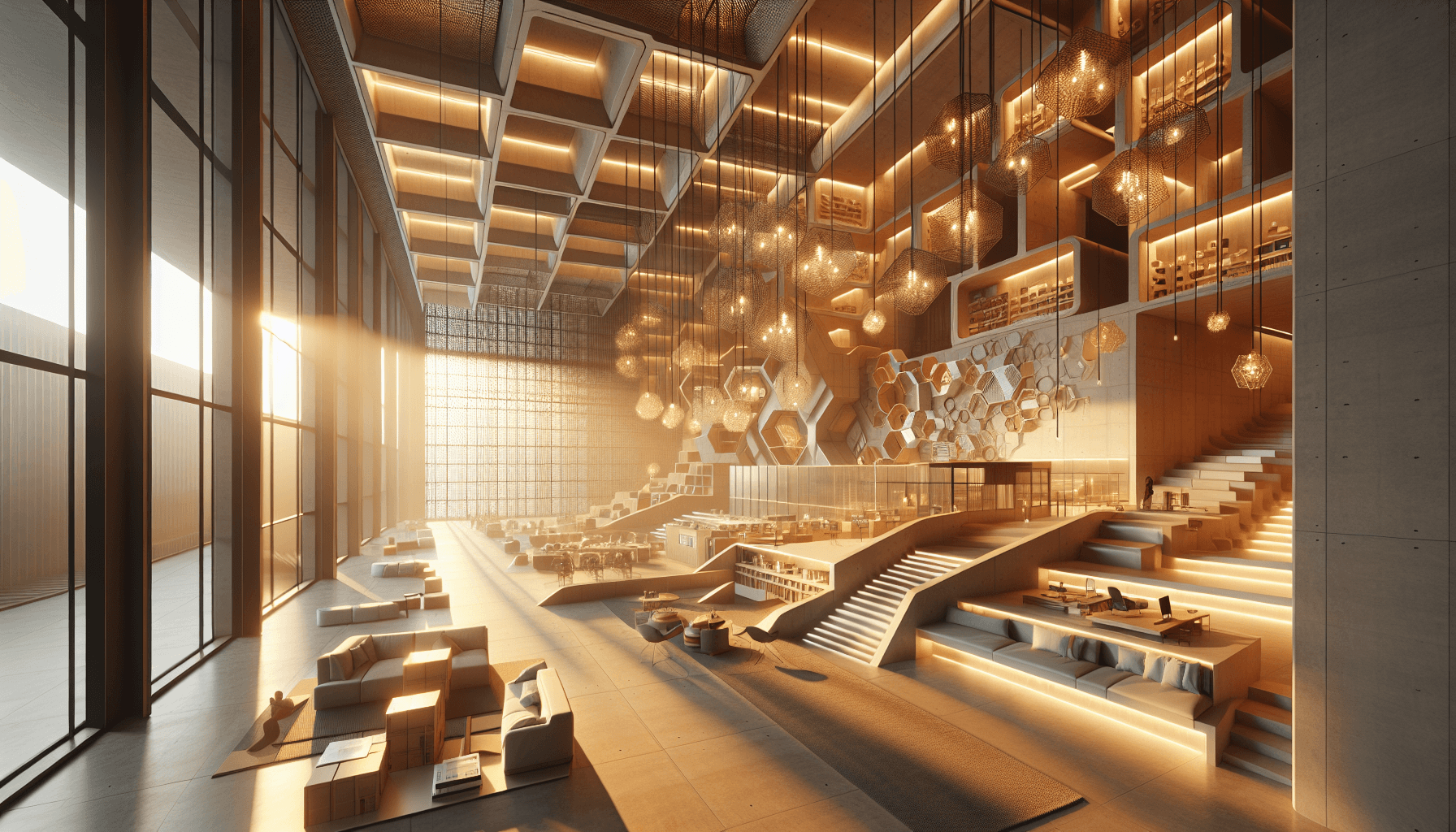
Understanding the Importance of Space Planning
Space planning is a critical aspect of interior design that ensures the effective utilisation of available space, promoting not only efficiency but also a sense of well-being among occupants. In today's fast-paced environment, where productivity and comfort are paramount, strategically planned spaces can make all the difference.
The stakes are higher than they might appear. Commercial tenants in Grade-A office buildings routinely pay between £50 and £120 per square foot annually in major cities. An inefficiently planned floor plate — one where circulation corridors are oversized, breakout areas are poorly positioned, or structural cores fragment usable zones — translates directly into wasted expenditure. In healthcare, the consequences are still more tangible: a poorly resolved nursing-station layout can add several minutes to every patient-response cycle across a shift, compounding fatigue and elevating clinical risk.
Building Information Modelling (BIM) has emerged as a significant game-changer in this domain, offering advanced capabilities for designing spaces that are as functional as they are welcoming. By leveraging the power of BIM, designers and architects can ensure that every inch of space is optimally used to enhance flow and functionality whilst prioritising the users' overall experience. The difference between a good space and a great one often comes down to decisions made in the model long before a single partition wall is erected.
How BIM Enhances Space Planning
BIM allows for an integrated approach to design, bringing together architecture, engineering, and construction stakeholders onto a single platform. Unlike traditional methods relying heavily on 2D drawings, BIM offers a three-dimensional perspective that aids in visualising spatial dynamics. Here is how BIM streamlines space planning:
Enhanced Visualisation
BIM facilitates a highly realistic view of the interior landscapes, allowing designers to "walk through" the planned space before any physical construction begins. This makes it possible to identify potential bottlenecks and inefficiency points during the planning phase rather than during costly construction or, worse, after occupation.
Consider a large district general hospital reorganising its emergency department. Using a Level 2 BIM model, the clinical planning team ran virtual walkthroughs at 1:1 scale using VR headsets linked to the Revit model. Staff were able to flag that the proposed triage corridor narrowed to 2.1 metres at a structural column — insufficient for two trolleys to pass without one reversing. That single early intervention avoided a change order that, at construction stage, would have required relocating a load-bearing element at significant cost. The same principle applies to retail fit-outs, where gondola runs and checkout queues can be simulated against customer-flow data before a single fixture is procured.
Improved Collaboration
By employing BIM, interior designers can work in tandem with engineers and contractors from day one. This ensures all decisions related to fixtures, fittings, and layout adjustments are well-coordinated rather than resolved piecemeal through a chain of revision clouds and email threads.
A real-world example can be seen in collaborative design efforts for open office layouts, where the positioning of workstations, breakout spaces, and private meeting rooms can be harmonised to optimise employee interaction whilst reducing noise disruptions. When mechanical, electrical, and plumbing (MEP) engineers model their ceiling-level services inside the same federated file, interior designers immediately see whether a proposed ceiling coffer conflicts with ductwork, or whether a relocated demountable partition will block a sprinkler head. Coordination that once required weekly clash-detection meetings can be surfaced automatically through tools such as Autodesk Navisworks or Trimble Connect, freeing the design team to focus on the quality of the space rather than administrative firefighting.
Space Utilisation and Efficiency
BIM enables the precise measurement of available space, helping designers to fit in necessary components without overcrowding. For residential apartment planning, this means accurately judging space requirements for shared amenities such as gyms or community lounges and ensuring those areas comply with Building Regulations Part M accessible-design requirements from the outset.
The ability to simulate different layouts enables designers to choose configurations that maximise efficiency and enhance the user's quality of life. BIM schedules — auto-generated spreadsheets linked directly to the model geometry — provide live net-usable-area figures as the layout evolves. A designer moving a demise boundary by 300 mm will see the Gross Internal Area and Net Internal Area figures update instantly, allowing commercial viability to be tracked in real time without a separate quantity surveyor's take-off at each design stage.
BIM for Well-Being and Environmental Comfort
A well-designed space contributes significantly to the well-being of its users. BIM can play a pivotal role in creating such environments by factoring in lighting, acoustics, and temperature modulation — elements that qualitative sketches and 2D plans cannot adequately represent.
Natural Light Optimisation
BIM's simulation capabilities allow for rigorous analysis of natural light penetration within interiors. By understanding how sunlight affects different areas at various times of the day and across seasons, interior spaces can be configured to maximise daylight usage, which has been proven to uplift mood, improve circadian rhythm, and reduce reliance on artificial lighting.
Tools such as Autodesk Insight or integrated Ladybug/Honeybee plugins within Grasshopper (linked to a Revit model via live links) can run solar radiation studies and daylight-factor calculations at LOD 300. A London-based workplace refurbishment project used this approach to demonstrate that rotating an open-plan workspace by 15 degrees relative to the building core increased the average daylight factor across the floor plate from 1.8% to 2.6% — comfortably above the CIBSE guidance threshold of 2% for predominantly visual tasks. The intervention required no structural changes, only a rethinking of the internal layout.
Acoustic Planning
Sound plays a crucial role in the comfort level of any space. Utilising BIM helps in designing spaces that reduce noise pollution through optimal wall placements and the use of sound-absorbing materials. For libraries, recording studios, or open-plan call centres, detailed acoustic planning is essential to ensure the right sonic character in each zone.
Acoustic consultants can link room-geometry data from the BIM model into simulation software such as ODEON or Ease, running reverberation-time (RT60) calculations for each space. If a proposed conference room returns an RT60 of 0.9 seconds — too lively for intelligible speech — the model can be updated to add acoustic tiles, adjust ceiling height, or introduce soft furnishings, and the calculation rerun before any procurement decision is made. This iterative approach, impossible with 2D drawings alone, eliminates the expensive post-occupation remediation that has historically plagued healthcare wards and educational buildings.
Implementing BIM-Led Space Planning: A Practical Workflow
Moving from traditional CAD-based space planning to a BIM-driven process requires a structured implementation approach. The following workflow reflects industry-proven steps that teams can adapt to their specific project type and scale.
1. Define the Information Requirements
Before modelling begins, the project's Employer's Information Requirements (EIR) or Asset Information Requirements (AIR) should specify what spatial data the model must contain — net usable areas by room, occupancy classifications, accessibility compliance status, furniture loading, and so on. Without a clear brief, the model risks being built to the wrong Level of Detail (LOD) for space-planning decisions.
2. Establish the Baseline Model
For new builds, the structural and architectural BIM model forms the container into which space-planning decisions are layered. For refurbishment projects, a measured survey — ideally a point-cloud scan processed through software such as Leica Cyclone or Faro Scene — should be registered and imported to create an as-built baseline. The gap between a 20-year-old AutoCAD plan and the actual building can be substantial; space-planning decisions built on inaccurate geometry will carry that inaccuracy forward.
3. Model the Space Programme
Using room-scheduling tools within Revit or ArchiCAD, each required space is modelled as a bounded zone with attributes: department, function, target area, adjacency requirements, and acoustic or lighting performance targets. This "space model" sits alongside the architectural shell and becomes the benchmark against which the evolving layout is tested.
4. Run Iterative Layout Studies
With the space programme loaded, the design team develops layout options — typically two or three — and compares them against the programme using automated schedule reports. Each option is stress-tested for circulation efficiency (are desk-to-meeting ratios correct?), regulatory compliance (do all escape routes meet Part B widths?), and environmental performance (do the solar and acoustic simulations pass?).
5. Conduct Stakeholder Reviews in the Model
Rather than presenting layouts as printed plans, project teams increasingly host model-based reviews using collaboration platforms such as BIM 360 or Trimble Connect, where end-users can annotate directly on the 3D model. This closes the feedback loop far more effectively than mark-ups on A1 drawings.
6. Lock and Document
Once the preferred layout is approved, the model is issued as the "Approved for Construction" dataset. Room data sheets generated directly from model attributes form part of the handover documentation, reducing discrepancies between the design intent and the building manual the facilities management team will use post-occupancy.
Case Studies: BIM Space Planning in Action
Mixed-Use Residential Development, Birmingham
A mid-tier developer was planning a 240-unit build-to-rent scheme with ground-floor retail and communal amenity space on levels one and two. Early 2D planning showed the gym, co-working lounge, and residents' cinema could be accommodated within the footprint, but the scheme was tight. The design team used a Revit-based space-planning model to simulate four different configurations of the amenity floors. Simulation revealed that in three of the four options, the co-working lounge had no direct natural light — a significant marketing liability in a competitive rental market. The fourth arrangement, which rotated the gym to the building's north-east corner (where natural light was less critical for that use) and positioned the co-working space along the south-east facade, met CIBSE daylighting targets and was adopted. The BIM workflow also generated compliant room data sheets for the building safety regulator's Golden Thread requirements from the outset.
NHS Community Health Hub, Yorkshire
A primary care network was consolidating seven dispersed GP practices into a single purpose-built health hub. The clinical brief was unusually complex: the hub needed to support general practice, physiotherapy, podiatry, mental health counselling, and a pharmacy, each with different acoustic and privacy requirements. The BIM team modelled the space programme using a colour-coded zone model and ran adjacency analysis to identify which departments were generating the most shared-use conflicts. The analysis flagged that the initially proposed location of the mental health counselling suite — adjacent to the children's vaccination clinic — would create an unacceptable noise overlay during peak morning sessions. The suite was relocated to the building's quietest elevation with minimal design disruption. Post-occupancy surveys at six months reported a 34% reduction in patient-reported disturbance compared with the legacy estate.
Corporate Headquarters Fit-Out, London
An international professional-services firm undertook a post-pandemic headquarters redesign, reducing its London footprint from four floors to two whilst increasing collaborative workspace. Using occupancy sensor data overlaid onto the BIM model, the design team identified that roughly 40% of the previous office's enclosed meeting rooms were utilised for fewer than two hours per day. BIM space modelling was used to convert those rooms into a tiered set of flexible neighbourhoods — focus booths, project tables, and formal boardroom space — sized and positioned against the sensor data. The redesign achieved a 22% reduction in total net internal area whilst increasing the number of bookable collaboration spaces by 60%.
Key Metrics for Measuring BIM Space-Planning Success
Successful BIM-led space planning should be evaluated against measurable outcomes, not just design intent. The following metrics are widely used by workplace strategists, healthcare planners, and residential developers:
- Space efficiency ratio — net usable area divided by gross internal area. Well-designed commercial buildings typically achieve 75–80%; a BIM-optimised fit-out should target 80%+ by eliminating redundant circulation.
- Occupancy density — usable square metres per person. UK Government workplace guidance (GPA) targets 8–10 sq m NIA per workstation for a hybrid estate.
- Daylight factor — percentage of outdoor illuminance available indoors under a standard overcast sky. CIBSE guidance: 2% for offices, 5% for schools.
- RT60 reverberation time — target values vary by use: 0.4–0.6 seconds for open-plan offices, 0.6–0.8 seconds for classrooms, below 0.5 seconds for counselling and clinical consultation rooms.
- Post-occupancy evaluation (POE) scores — structured surveys at 6 and 12 months against baseline pre-move data. A well-executed BIM-driven project should show measurable improvement in satisfaction with noise levels, thermal comfort, and ease of navigation.
Tracking these metrics within the BIM model — rather than as a separate post-occupancy exercise — creates a feedback loop that informs future projects and builds a firm's evidence base for design decisions.
Real-World Application: A Case Study in Corporate Workplace Design
Consider the example of a corporate office that intended to transition to a more open-plan environment to foster collaboration. By using BIM, the design team analysed existing workflows and employee movements, identifying natural pathways and collaborative clusters through badge-reader data mapped onto the existing floor plan.
As a result, the final design featured varying work zones — a hub for collaboration, quiet corners for focused tasks, and flexible meeting spaces — each meticulously planned with input from end-users through model-based review sessions. This BIM-driven solution increased accessibility, reduced stress-related complaints, and improved overall productivity. The phased delivery was also managed through the model: construction sequences were clash-checked against operational areas, ensuring the business remained fully functional throughout the fit-out.
Conclusion
BIM has transformed the landscape of space planning, allowing designers to optimise interior layouts with a focus on efficiency, flow, and well-being. By providing tools for accurate visualisation and facilitating greater collaboration among stakeholders, BIM ensures that every project meets high standards of functionality and user satisfaction.
In a world where every space must serve multiple functions — and where occupier expectations, regulatory requirements, and sustainability targets are all tightening simultaneously — the adoption of BIM in interior design heralds a smarter, more evidence-based approach to creating environments that are not only efficient and aesthetic but also genuinely conducive to the well-being of their users. The case studies and workflow described above demonstrate that these are not aspirational outcomes; they are achievable, measurable, and repeatable with the right tools and process discipline.
At Adyantrix, our BIM consulting and architectural BIM services teams bring precisely this combination of technical rigour and design intelligence to every space-planning engagement. Whether you are refurbishing a corporate headquarters, delivering a healthcare facility, or planning a mixed-use residential scheme, we embed space-utilisation analysis, environmental simulation, and stakeholder coordination into a single BIM workflow — so that the space decisions made on screen translate faithfully and efficiently into the built environment. Get in touch to discuss how BIM-led space planning can unlock the full potential of your next project.
Speak with our BIM Consulting team at Adyantrix to find out how we can support your next project.