The Digital Transformation of Construction Sites
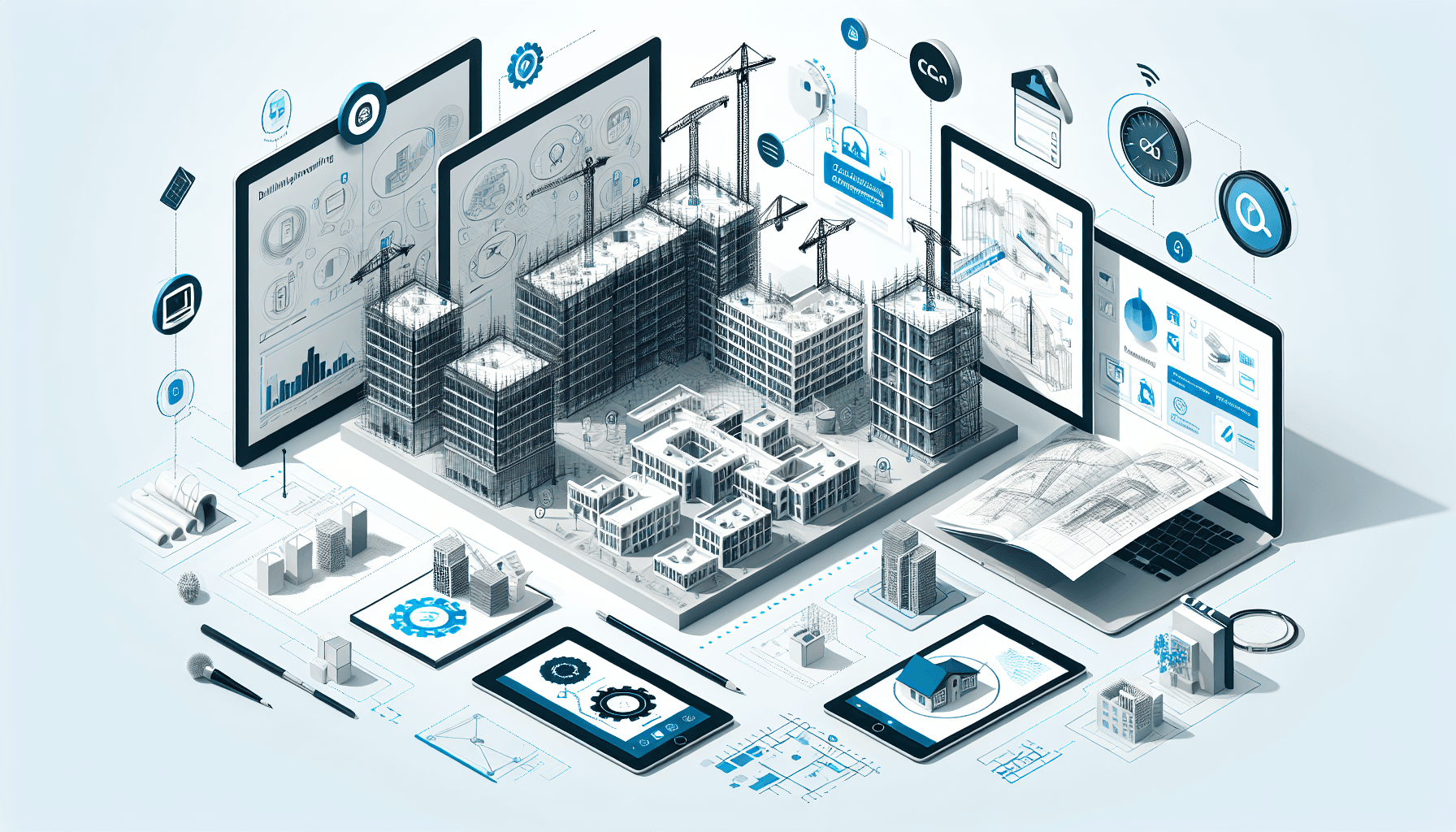
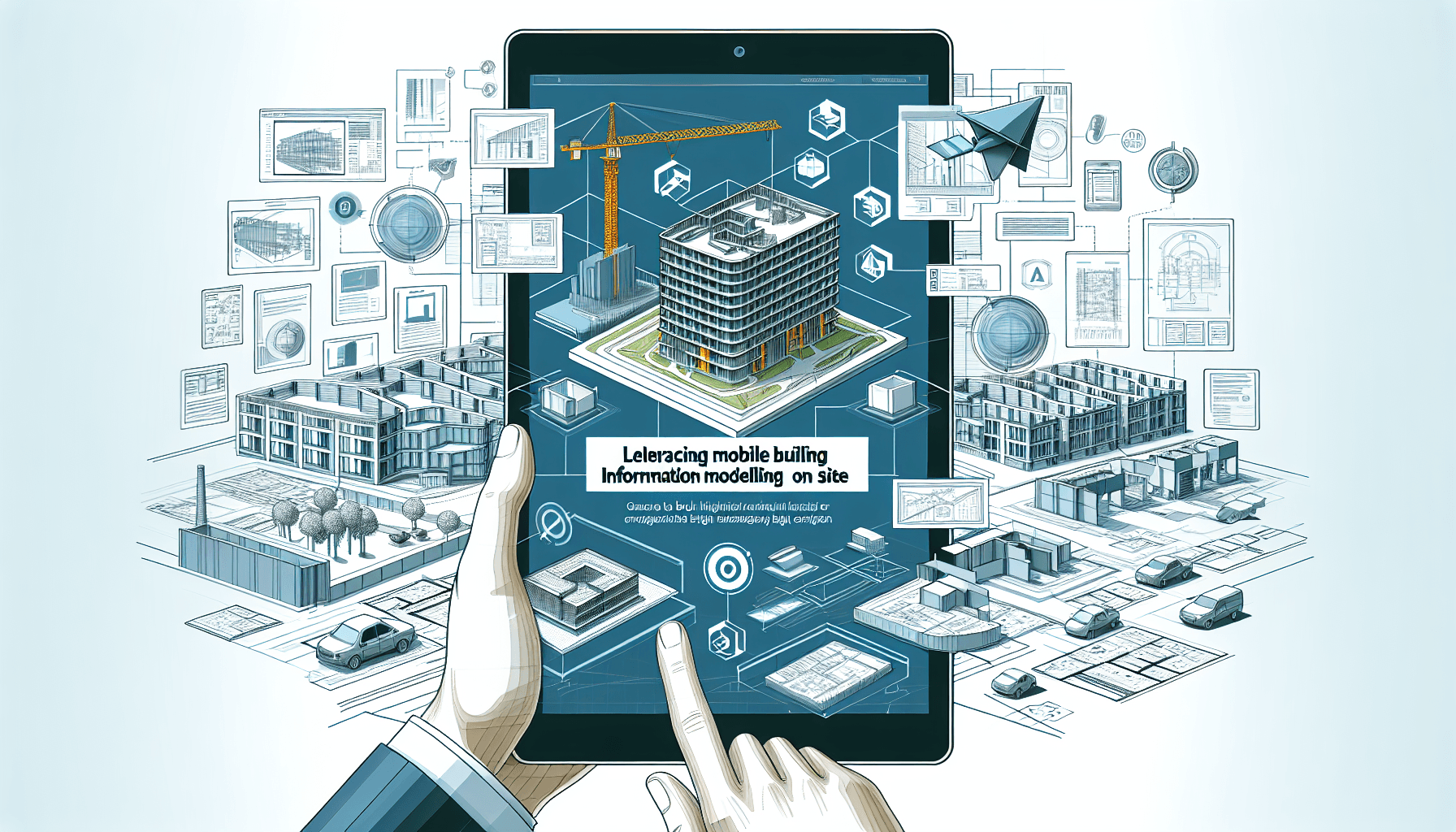
In the ever-evolving construction industry, emerging technologies like Building Information Modelling (BIM) coupled with Augmented Reality (AR) are transforming traditional practices, especially when leveraged on mobile devices such as tablets. This seamless integration is increasingly bridging the notorious design-to-build gap, enhancing efficiency and accuracy on construction sites.
The design-to-build gap is one of the most persistent and costly challenges in construction. It arises when information created during the design phase fails to translate reliably into field execution — owing to outdated drawings, miscommunication between disciplines, or the sheer impracticality of referencing a 500-page drawing set on a muddy site. Historically, this gap has been responsible for a significant proportion of rework costs, which industry data consistently places between 5 and 10 percent of total project value. Mobile BIM, deployed through purpose-built tablet applications, directly addresses this problem by putting accurate, live, and spatially contextual information in the hands of the people who need it most: those building the structure.
Why Use Tablets for BIM on Site?
Construction projects traditionally relied on paper plans and manual coordination, which often led to misunderstandings and errors. In contrast, utilising tablets with BIM capabilities offers intuitive access to real-time, multi-dimensional data, right in the palm of the builder's hand. Mobile BIM allows on-the-spot assessment of 3D models, making it easier to visualise complex structures in the context of actual site conditions.
Take, for instance, the case study of a recent high-rise development in London. Project managers armed with tablets could readily address site discrepancies by comparing real-time 3D models directly with the physical environment. This not only reduced significant change orders but also minimised project delays.
The practical advantages of tablets extend beyond mere convenience. Modern construction tablets are purpose-engineered for site conditions — they are typically dust-resistant, water-resistant, and capable of operating in direct sunlight without screen washout. Applications such as Autodesk BIM 360, Trimble Connect, and Procore allow field teams to navigate federated models, raise and assign issues directly from the model view, and attach photographic evidence linked to specific building elements. This creates a continuous, traceable record of site activity that feeds back into the project's common data environment, maintaining model integrity from inception to handover.
There is also the matter of version control. One of the perennial problems with paper-based or even PDF-based drawing distribution is that outdated revisions end up in circulation simultaneously with current ones. Mobile BIM platforms enforce a single source of truth: when a designer updates a model and publishes a new revision, every device on the project reflects that change without requiring manual redistribution. The reduction in drawing coordination errors alone justifies the investment in mobile BIM infrastructure for most medium-to-large projects.
Enhancing Collaboration and Efficiency
One of the profound benefits of BIM-enabled tablets is the enhancement of on-site collaboration across teams — architects, engineers, and contractors can access and interact with the same data set, ensuring everyone is aligned on project deliverables. Further, any changes made in the digital model are instantaneously reflected in everyone's copies, practically eliminating the downtime usually caused by communication errors.
For example, during a commercial construction project in Manchester, subcontractors used BIM-driven AR on tablets to quickly identify installation issues, allowing them to proactively coordinate with project managers and resolve problems before they escalated.
This kind of collaborative efficiency is not limited to design disciplines. MEP (mechanical, electrical, and plumbing) trades benefit enormously from mobile BIM access because their work involves the highest density of coordination risk on any project. When a plumber, an electrician, and an HVAC installer can each view the federated MEP model on their own device and cross-reference spatial conflicts in real time, the number of on-site clashes resolved before installation begins increases substantially. In projects where pre-construction clash detection has been thorough, mobile BIM simply becomes the tool that verifies compliance with the agreed coordination model during installation — rather than discovering fresh clashes in the ceiling void.
Beyond the trades, site managers and quantity surveyors also gain. Progress tracking linked to BIM objects allows for automated quantity take-offs against completed work, reducing the time spent on measurement walks and improving the accuracy of interim valuations. When a task is marked complete in the field and linked to a model element, the commercial team benefits immediately without waiting for the next formal site visit.
Augmented Reality: The Game Changer
Augmented Reality takes the concept of mobile BIM a step further by overlaying digital information upon the physical world. This real-time data integration allows on-site workers to superimpose the BIM model onto an actual setting, facilitating precise construction layout, accurate installation, and quick validation of completed works against designed specifications.
Imagine an AR-equipped tablet on a busy construction site — workers view a live feed blended with digital enhancements to verify if a beam aligns as per the architectural plan. Such practical applications drastically reduce errors and rework, which is a boon for both time and cost management in construction projects.
The mechanics of AR on site have matured considerably in recent years. Early implementations required expensive dedicated headsets and significant setup overhead. Today, tablet-based AR using platforms such as Trimble XR10, VisualLive, or DAQRI can be deployed with minimal calibration. A site engineer simply holds up a tablet, points the camera at the relevant area, and the application — using a combination of GPS, gyroscope data, and model georeferencing — overlays the BIM geometry at the correct position and scale. The engineer can then walk through the space seeing hidden elements such as embedded reinforcement, concealed service routes, or structural connections rendered in their true positions within the physical environment.
This capability is particularly valuable during setting-out activities. Traditional setting-out using total stations and string lines is time-consuming and requires skilled operatives. AR-assisted setting-out allows a general operative to verify gridline positions, slab edge locations, and penetration co-ordinates against the BIM model in minutes, with photographic evidence captured automatically for quality assurance records. The reduction in setting-out errors has been documented to reduce concrete remediation costs significantly on projects that have adopted the approach.
Handover and inspection workflows also benefit from AR. At the end of a construction phase, a site inspector can use AR to compare the as-built condition against the design intent, flagging deviations immediately. These deviations are logged as issues in the BIM platform, assigned to the responsible party, and tracked to resolution — creating an auditable quality trail that satisfies client and regulatory requirements.
Implementing Mobile BIM: Practical Considerations
Deploying mobile BIM effectively requires more than procuring tablets and downloading an application. Successful implementations share a set of common characteristics that are worth understanding before embarking on a field BIM programme.
Model preparation is the first prerequisite. A BIM model that works well in a design authoring environment may not be optimised for field use. Large Revit or IFC files need to be published to lightweight formats appropriate for mobile consumption, with appropriate level-of-detail settings that balance geometric fidelity against device performance. Teams should establish a regular model publishing schedule — typically weekly or aligned with programme milestones — so that field models remain current without overwhelming the project's data infrastructure.
Connectivity planning is equally important. While many field BIM applications offer offline mode, the full benefit of real-time synchronisation requires reliable internet access on site. A connectivity assessment during early site establishment, followed by the installation of site-wide Wi-Fi or the provision of cellular data plans for devices, is a sensible investment. Projects in remote locations or deep basement construction zones should plan for offline workflows with periodic synchronisation.
Training and change management determine whether a field BIM investment translates into genuine efficiency gains or becomes shelfware. Field operatives do not need to understand BIM authoring, but they do need confidence in navigating models, raising issues, and trusting the information they see. Short, focused training sessions tailored to specific roles — rather than generic BIM awareness workshops — consistently produce better adoption outcomes. Identifying and supporting internal champions within the site team accelerates uptake considerably.
Governance and accountability close the loop. Mobile BIM is most effective when issues raised in the field are monitored, assigned, and resolved within defined timeframes. A weekly issue review cadence, incorporated into the existing site progress meeting, ensures that the field team's observations are acted upon promptly, reinforcing the value of the tool and sustaining engagement.
Integration with Broader Digital Construction Workflows
Mobile BIM and AR do not operate in isolation — their value compounds when integrated with the broader digital construction ecosystem. When field data flows directly into the project's common data environment, it becomes available for analysis and decision-making across the project organisation.
Progress photographs taken via a BIM platform are georeferenced and time-stamped, enabling timeline visualisations that give project directors a clear picture of construction sequence adherence. Issue data aggregated across a project portfolio reveals patterns — recurring coordination failures in specific disciplines, particular subcontractors with elevated defect rates, or design details that consistently generate field queries — that inform continuous improvement at the organisation level.
Integration with scheduling tools such as Asta Powerproject or Primavera P6 creates a 4D BIM layer in which planned versus actual progress can be assessed visually against the model. When a site manager marks a structural zone as complete on their tablet, that completion status can update the programme automatically, giving the planning team an accurate basis for lookahead scheduling without manual data entry.
The convergence of mobile BIM with IoT sensor data is a further frontier. Projects that instrument their sites with environmental monitoring, concrete maturity sensors, or structural health monitoring devices can visualise that data through the BIM model, providing a spatially contextual view of site conditions that text-based dashboards cannot replicate. A project engineer checking curing progress for a post-tensioned slab can overlay temperature and humidity readings from embedded sensors against the BIM pour sequence, making informed decisions about when to proceed with subsequent activities.
Future Prospects
As connectivity and mobile hardware continue to advance, the capabilities of BIM and AR on construction sites are expected to grow exponentially. More immersive experiences, enhanced data analytics, and AI-driven insights stand as prevailing future trends.
The transition from AR to Mixed Reality (MR), facilitated by devices such as the Microsoft HoloLens 2, represents the next meaningful step for field BIM. Unlike tablet-based AR, MR headsets are hands-free, allowing operatives to reference the BIM model while keeping both hands available for installation work. Early adopters in infrastructure and industrial construction have reported compelling results for complex mechanical assembly and precision pipework, where the spatial accuracy of MR guidance reduces alignment errors to sub-millimetre tolerances.
Artificial intelligence is beginning to play a role as well. Computer vision models trained on construction imagery can compare photographs taken during tablet-based progress walks against the BIM model to automatically assess installation completeness, flag deviations, and generate structured quality records. As these models mature and as on-site image capture becomes more systematic, the prospect of largely automated quality assurance for routine construction activities is credible within the medium term.
Companies aiming to stay ahead in the highly competitive construction landscape should proactively invest in training their workforce on mobile BIM tools and AR technologies — a small investment now could lead to significant productivity and financial gains down the line.
Conclusion
Adopting mobile BIM on tablets and leveraging AR technology on construction sites is not simply a technological upgrade — it is a strategic repositioning of how information is managed, communicated, and acted upon throughout the construction process. The design-to-build gap, long accepted as an unavoidable feature of complex projects, is increasingly a choice: teams that put accurate, spatially contextual information in the hands of field operatives consistently outperform those that do not.
The compounding benefits — reduced rework, faster issue resolution, improved coordination, automated quality records, and richer data for future projects — represent a substantial and measurable return on the investment required to implement mobile BIM effectively. As hardware becomes more capable, connectivity more ubiquitous, and software more intuitive, the barriers to adoption continue to fall.
At Adyantrix, our BIM consulting and digital construction services are built around the practical realities of field implementation. We support clients from BIM execution planning through to field deployment, ensuring that the investment in digital tools translates into tangible outcomes on site. Whether you are looking to implement mobile BIM for the first time, upgrade an existing workflow, or integrate AR into your quality assurance processes, our team brings the technical depth and project experience to make it work. Get in touch to explore how we can help your organisation close the design-to-build gap on your next project.
Speak with our BIM Consulting team at Adyantrix to find out how we can support your next project.