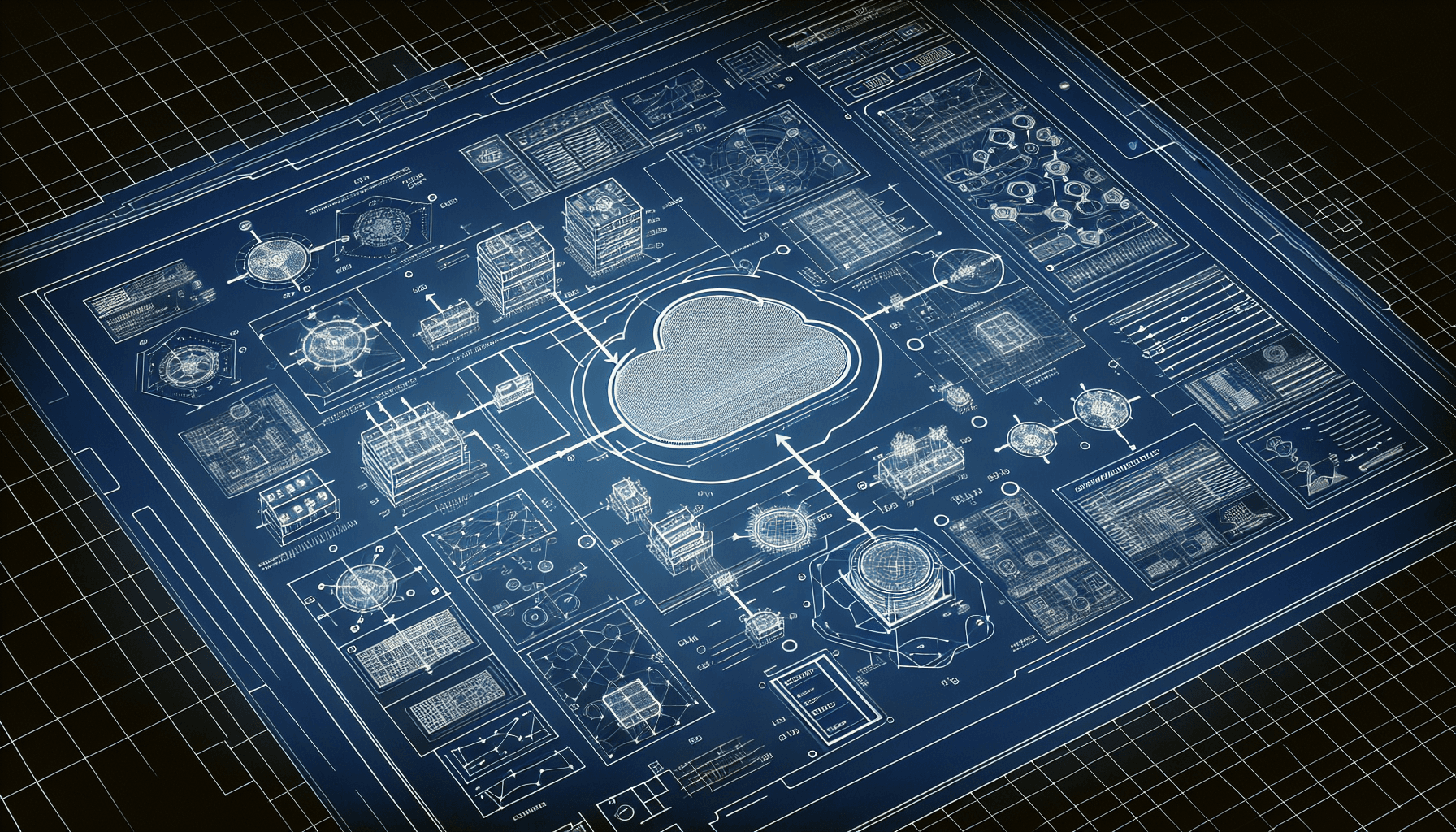
Understanding the Data Lakehouse Concept
In the ever-evolving landscape of big data, the need for a more agile and efficient data management approach led to the emergence of the data lakehouse concept — a unified platform that aims to combine the best aspects of data lakes and data warehouses. Unlike traditional data lakes, which often suffer from inefficiencies and data management challenges, a lakehouse provides structure, transactional integrity, and accessibility without compromising the flexibility of storing raw data.
The architectural tension that the lakehouse resolves is decades old. Data warehouses — think Teradata, Snowflake, or Redshift — offer strong consistency, schema enforcement, and fast analytical queries, but they demand that data be cleaned and transformed before ingestion. Data lakes, built on HDFS or object stores such as Amazon S3 and Azure Data Lake Storage, accept anything in any format, yet they historically lacked transactional guarantees, making them unreliable for production analytics. Engineers ended up maintaining both systems in parallel: a raw lake for storage and a warehouse for querying. The operational overhead was considerable, and the data duplication costly.
The lakehouse collapses this two-tier stack into one. By adding a metadata and transaction layer directly on top of object storage, it allows raw and curated data to coexist, served by a single query engine. Crucially, this does not mean sacrificing performance. Modern query optimisers — Spark, Trino, DuckDB — can leverage file-level statistics, partition pruning, and column-level bloom filters embedded in formats like Parquet to achieve sub-second query times on petabyte-scale tables.
Modern data lakehouses typically incorporate advanced technologies and tools like Delta Lake and Apache Iceberg, which have become popular choices due to their robust features suited to handle large-scale data sets efficiently.
Delta Lake: Bridging Batch and Streaming Data
Delta Lake, built atop Apache Spark, offers a transactional storage layer that enhances data reliability and performance, making it an essential component of modern lakehouses. Delta Lake introduces ACID (Atomicity, Consistency, Isolation, Durability) transactions to the traditionally schema-less architecture of data lakes. This transformation is crucial for enterprises needing consistent and reliable analytics results.
The Delta transaction log — a sequence of JSON commit files stored alongside the data — is the mechanism that makes ACID semantics possible on plain object storage. Every write, whether an append, an overwrite, a merge, or a delete, appends a new entry to this log. Readers reconstruct the current state of a table by replaying the log from the last checkpoint. Because S3 and ADLS support atomic object creation, concurrent writers can detect conflicts without a central lock manager, enabling optimistic concurrency control at scale.
Key Features of Delta Lake
- Schema Evolution: Delta Lake allows for dynamic changes to the data schema, making it easy to incorporate evolving business requirements. In practice, this means adding a new
customer_segmentcolumn to a billion-row fact table without rewriting existing Parquet files — Delta marks the column as nullable in the schema metadata and back-fills with nulls on read. - Data Versioning and Time Travel: It maintains historical versions of data, which simplifies tracking changes and rollback operations when errors occur. A misconfigured ETL job that corrupts a table can be reversed with a single
RESTORE TABLE events TO VERSION AS OF 42command, eliminating the need for costly point-in-time restores from tape or snapshot backups. - Support for Batch and Streaming: By seamlessly handling both batch and streaming data, Delta Lake removes the traditional boundaries between these data types. Structured Streaming treats Delta tables as both a source and a sink, enabling exactly-once end-to-end pipelines where Kafka consumers write raw events and downstream jobs read incrementally via the
readStreamAPI. - Efficient Storage via Z-Ordering and Liquid Clustering: Delta's
OPTIMIZEcommand compacts small files — a perennial pain point in streaming workloads — and Z-ordering co-locates records sharing common filter values within the same Parquet row groups. Databricks' newer Liquid Clustering goes further, removing the need to declare static Z-order keys by adaptively reorganising data as query patterns shift. - Change Data Feed: When enabled, Delta exposes a
_change_typecolumn that records whether each row was inserted, updated, or deleted. Downstream consumers — a reporting database, a feature store, a vector index — can subscribe to incremental changes rather than reprocessing full snapshots, dramatically reducing compute costs in CDC pipelines.
Apache Iceberg: Optimising Big Data Management
Apache Iceberg, largely favoured for its stability and support for complex data structures, is another notable technology making waves in data lakehouses. Iceberg's wide adoption stems from its ability to efficiently manage the metadata typically associated with big data environments.
Originally developed at Netflix to address chronic performance and correctness problems with Hive's partition model, Iceberg was open-sourced and donated to the Apache Software Foundation in 2018. Netflix was managing tables with hundreds of thousands of partitions, and Hive's directory-listing approach to discovering partitions was creating minute-long query planning times. Iceberg replaced directory listings with a tree of metadata files — a manifest list pointing to a set of manifests, each listing individual data files with per-file column statistics. Query planners can prune irrelevant files entirely in memory, without touching object storage at all.
Iceberg's Standout Capabilities
- High Scalability: Iceberg's architecture is explicitly designed to scale to meet the needs of the largest datasets, efficiently managing both small and large tables. Amazon's internal reporting tables reportedly exceed hundreds of petabytes stored as Iceberg tables on S3, with query planning that remains sub-second regardless of table size.
- Partition Evolution: It provides a solution to the perennial problem of table partitions, allowing for dynamic changes without requiring costly table rewrites. A table originally partitioned by
month(event_time)can be re-partitioned byday(event_time)for future data while legacy partitions remain unchanged — both partition schemes coexist transparently under a single table identity. - Time Travel and Snapshot Isolation: Similar to Delta Lake, Iceberg supports time-travel queries, empowering users to traverse past states of the data. Each write produces a new snapshot referenced by a monotonically increasing snapshot ID. Readers can pin to a specific snapshot ID or a timestamp, providing strong snapshot isolation that prevents analysts from seeing partially committed writes.
- Compatibility and Extensibility: Apache Iceberg provides compatibility with SQL engines including Apache Hive, Trino, Spark, Flink, Dremio, and Snowflake's External Tables feature. This engine-agnostic design is a genuine differentiator — teams can migrate query engines without changing their table format, avoiding vendor lock-in at the storage layer.
- Row-Level Deletes and Merge-on-Read: Iceberg supports both copy-on-write and merge-on-read strategies for updates and deletes. In copy-on-write mode, the affected data files are fully rewritten on every change — consistent, but expensive. In merge-on-read mode, delete vectors (position or equality deletes) are written as separate small files and applied at read time, enabling high-throughput ingestion of CDC events with deferred compaction.
Choosing Between Delta Lake and Apache Iceberg
The decision between implementing Delta Lake or Apache Iceberg largely depends on specific organisational needs and the existing data ecosystem. Delta Lake is a solid choice if the enterprise relies heavily on Apache Spark or requires tight integration with Databricks. Conversely, Iceberg is preferred when an organisation needs robust support for multiple query engines or requires more sophisticated schema management capabilities.
There are several practical dimensions to weigh:
- Compute platform: If the entire analytics stack runs on Databricks, Delta Lake's native integration (Auto Loader, Delta Live Tables, Unity Catalog) provides a seamless developer experience. If the organisation wants to run Trino for ad-hoc queries, Flink for stream processing, and Spark for batch — all against the same tables — Iceberg's broad engine compatibility is decisive.
- Cloud vendor: AWS promotes Iceberg natively in Athena, Glue, and EMR, and S3 Tables (launched in late 2024) is an Iceberg-native managed service. Azure and Google Cloud have stronger Delta Lake support via Databricks. The cloud roadmap influences which format receives first-class tooling over time.
- GDPR and right-to-erasure requirements: Both formats support row-level deletes, but Iceberg's equality-delete vectors are particularly well-suited to GDPR erasure workloads, where a small number of customer records must be purged from large tables without full file rewrites.
- Operational maturity: Delta Lake benefits from Databricks' commercial support, extensive documentation, and a large community. Iceberg's governance under the Apache Foundation means slower but broader consensus-driven evolution, which appeals to organisations wary of single-vendor dependencies.
Beyond Delta Lake and Apache Iceberg: Apache Hudi and the Open Table Format Landscape
While Delta Lake and Apache Iceberg remain at the forefront of lakehouse architecture, Apache Hudi (Hadoop Upserts Deletes and Incrementals) has carved out a distinct niche, particularly for near-real-time ingestion and record-level upsert workloads. Hudi originated at Uber to manage mutable rider and driver data at petabyte scale with sub-minute latency from source systems to queryable tables.
Hudi introduces two storage types — Copy-on-Write (CoW) and Merge-on-Read (MoR) — that mirror Iceberg's write strategies but with a strong emphasis on incremental pull queries. Downstream consumers query only the files changed since their last checkpoint, making Hudi particularly efficient for streaming ETL pipelines where the change volume is small relative to total table size.
The broader open table format landscape is converging. The OneTable (now Apache XTable) project provides a translation layer that generates metadata for Delta, Iceberg, and Hudi from a single underlying dataset, allowing organisations to serve the same data to consumers that prefer different formats. AWS's announcement of S3 Tables and the growing adoption of the REST Catalog specification signal that interoperability — not format dominance — is the direction the industry is heading.
Implementing a Data Lakehouse: A Practical Architecture
Translating lakehouse principles into a production system requires deliberate decisions at each layer of the stack:
Ingestion Layer: Event-driven pipelines using Apache Kafka or Amazon Kinesis feed raw data into a landing zone — unprocessed, schema-on-read Parquet or Avro files partitioned by ingestion date. Databricks Auto Loader or Apache Flink's Iceberg sink connector can process these files incrementally, writing ACID transactions into the bronze layer.
Bronze / Silver / Gold Medallion Architecture: The medallion pattern organises data into three quality tiers. The bronze layer holds raw, unmodified source data with full history. Silver applies deduplication, type casting, and schema enforcement, producing reliable joined datasets. Gold contains business-level aggregates — daily active users, revenue by product line, cohort retention — optimised for direct BI tool consumption. Each layer is a first-class lakehouse table with its own transaction log, enabling independent time travel and auditability per tier.
Catalogue and Governance: A centralised metadata catalogue — Apache Atlas, AWS Glue Data Catalog, Databricks Unity Catalog, or the open-source Project Nessie — maintains table definitions, lineage, and access policies across all three layers. Column-level access controls enforced at the catalogue level ensure that PII fields in silver tables are masked for analysts while remaining accessible to compliance workflows.
Query and Serving Layer: For exploratory analysis, Trino or Athena provide serverless SQL across Iceberg tables without moving data. For low-latency dashboards, materialised views in a columnar store (ClickHouse, Redshift, BigQuery) are refreshed incrementally via Change Data Feed exports. For ML feature serving, a dedicated feature store (Feast, Tecton) reads directly from gold-layer tables, ensuring that training and serving features are computed from the same source of truth.
Compaction and Maintenance: Small-file proliferation is the most common operational failure mode in streaming lakehouses. A nightly compaction job — OPTIMIZE for Delta, Iceberg's rewriteDataFiles action — merges thousands of small Parquet files into larger ones, reducing the number of S3 GET requests per query and cutting query latency by an order of magnitude. Vacuum jobs (VACUUM for Delta, expireSnapshots for Iceberg) remove obsolete snapshots and data files, controlling storage costs.
Real-World Applications of Modern Data Lakehouse Architectures
Consider a leading e-commerce company that needs to analyse thousands of transactions per minute across multiple regions. By employing a modern data lakehouse architecture, they can process real-time streaming data for up-to-the-minute insights while also conducting in-depth batch analysis for trend forecasting. In practice, this looks like a Flink job writing Iceberg snapshots every 60 seconds for the fraud-detection team, while a nightly Spark job reads the same Iceberg table to produce weekly cohort revenue reports for finance — two consumers, one dataset, zero duplication.
A global logistics operator managing parcel tracking across 50 countries deployed a Delta Lake-based lakehouse to consolidate scan events from 200 disparate carrier systems. Previously, each carrier's data lived in a separate relational database, and cross-carrier analytics required weekly batch extracts. After migration, the operations team could query end-to-end parcel journeys in real time, identify delay patterns across transit hubs, and surface predictive ETAs to customers — all from a single Delta table with schema evolution accommodating the idiosyncratic fields of each carrier's event format.
In the healthcare industry, a lakehouse can manage millions of patient records, ensuring data consistency, compliance with regulations, and an ability to support advanced analytics for predictive health metrics, ultimately improving patient outcomes. A regional hospital network in the United Kingdom used Iceberg's row-level delete capability to implement automated right-to-erasure workflows under UK GDPR. When a patient exercised their right to erasure, a deletion record was written as an Iceberg equality-delete file and applied at query time, satisfying legal obligations without the cost and risk of rewriting clinical history tables containing billions of rows.
In financial services, a mid-size asset management firm adopted a Delta Lake lakehouse to unify market data, trade blotter feeds, and risk model outputs — previously maintained as siloed CSV archives — into a single time-travel-enabled store. Regulators can now request a point-in-time reconstruction of the firm's risk exposure on any historical date, and the compliance team can produce the required view by querying the Delta log directly rather than hunting for archived flat files.
Business Impact and Key Metrics to Track
Adopting a lakehouse architecture delivers measurable improvements across several dimensions that business stakeholders care about:
Storage cost reduction: Eliminating the parallel lake-plus-warehouse architecture typically reduces storage and compute spend by 30–50%. A single Parquet-on-S3 store at lakehouse prices replaces separate warehouse storage at substantially higher per-TB costs.
Time-to-insight: Incremental processing via Change Data Feed or Iceberg's incremental scan reduces average pipeline latency from hours to minutes. Teams that previously waited overnight for refreshed dashboards gain same-day or near-real-time visibility.
Data reliability: ACID transactions eliminate the corrupt or partial reads that plague conventional data lakes. Engineering teams report significant reductions in data quality incidents once a transactional table format is in place, reducing the volume of ad-hoc data investigations that consume analyst time.
Developer productivity: Schema evolution and time travel reduce the blast radius of schema changes and pipeline bugs. Developers can iterate faster knowing that a botched migration is reversible, and onboarding new data sources no longer requires coordinating schema freezes across downstream consumers.
Regulatory compliance posture: Native support for row-level deletes, column masking at the catalogue layer, and immutable audit logs simplifies GDPR, HIPAA, and SOC 2 compliance evidence collection, reducing the manual effort required during audits.
Conclusion
Designing a modern data lakehouse by integrating technologies like Delta Lake and Apache Iceberg can significantly enhance data management, facilitating hassle-free analytics while maintaining data integrity and performance. As businesses increasingly rely on data-driven decisions, adopting these next-generation data infrastructures becomes not just a technical advantage but a strategic imperative.
The right choice of table format, query engine, and medallion tier structure depends on the organisation's existing ecosystem, cloud strategy, regulatory context, and engineering maturity. What is consistent across every successful lakehouse implementation is a commitment to treating data as a first-class product — governed, versioned, and accessible to every team that needs it.
At Adyantrix, our data engineering practice helps organisations design and deliver production-grade lakehouse architectures tailored to their specific scale and compliance requirements. From selecting the right open table format to building automated compaction pipelines, change data capture integrations, and catalogue governance frameworks, our engineers work alongside your team to move from prototype to petabyte-scale platform — without the false starts that come from navigating this rapidly evolving landscape alone. If your organisation is planning a lakehouse migration or wants to extract more value from an existing data lake investment, we would be glad to start the conversation.
Speak with our Data Engineering team at Adyantrix to find out how we can support your next project.